Skip to content

Live Music

MEETING BRIAN WILSON ON A STORMY NIGHT IN SAN FRANCISCO

(STEVE WAGNER reminisces about his day with the legendary genius)

BRIAN WILSON, THE BEACH BOYS 50TH ANNIVERSARY REUNION AT THE NEW ORLEANS JAZZ AND HERITAGE FESTIVAL, 27 APRIL 2012 (photo credit: TAKAHIRO KYONO)

Brian Wilson has been one of the most influential and inspirational musical artists of my lifetime and a source of perpetual fascination since I was about eight years old. I’ve had a somewhat unexpected response to his passing. Though I recognize and feel the loss deeply, I am left with only admiration, relief, and gratefulness. Admiration because the passing of such a towering figure naturally brings their life’s work into greater focus, and Brian’s achievements in harmonic composition and sound recording were, in a word, astonishing. Relief that Brian’s pain has ended, that the specters he’d lived with for so many years – no doubt compounded by the recent loss of his beloved wife Melinda – have finally, at long last, disappeared. And gratefulness, for the music, of course; Brian’s oeuvre has brought me countless hours of deeply satisfying listening pleasure, and his songcraft has been a creative beacon since I first picked up a guitar and attempted to create original songs.

Moreover, I’m grateful that Brian found the innate resolve (and community support) to persist through debilitating illness, to overcome addictions and psychological trauma, at least to the degree that he could experience years, even decades of relative peace and meaningful work. Above all, I’m grateful that Brian lived to see the immensely positive impact he had on the arts and the lives of millions who adored him.

The truth is that Brian was lucky to survive 1967. Or 1970. Or 1981, or so many other times in his life, when the disappointment and despair must have felt overwhelming. There is an easily-imaginable world in which Brian Wilson leaves us at a young age, just another drug casualty or member of the “27 club,” a quickly forgotten relic of a waning surf genre, seen only as an “early architect” of rock n’ roll who sort of meant something sometime between the years of Fabian and Hendrix.

But Brian’s music was always, and remains, transcendent. The art, the sound refused to die, and I intuit that the healing power of his music was what ultimately kept Brian alive through his many dark nights of the soul.

I’ve written about Brian a lot over the years – about his music, his mythology, his cultural influence, and even a bit about my personal experience of not only meeting him but also spending the better part of an afternoon and evening in his company. Here, I’d like to paint a fuller picture of that exhilarating day.

In January 2010, I was a director at the San Francisco Art Exchange, a gallery dedicated to music photography and original album cover art. We had begun a toe-in-the-water business relationship with Sir Peter Blake, the renowned British pop artist and art director for the Beatles’ Sgt. Pepper’s Lonely Hearts Club Band album cover. Peter had recently collaborated with Brian on an exclusive art book with Genesis Publishing titled That Lucky Old Sun, inspired by Brian’s recent album of the same name. We were busy selling the collectible book and limited-edition prints when the most incredible opportunity presented itself: Brian Wilson was willing to do some promotion on Peter’s behalf and would consider doing something in person at our gallery.

At this revelation, I needed to be given oxygen and placed on sedatives. Once I was revived, as I remember it, our three options were: 1) for X, Brian would come in the gallery, shake a few hands, pose for a few pictures, say a few words, and be gone: 2) for double X, he would come with a couple guys from his band and do a song or two a cappella along with pressing the flesh; or 3) for triple X, Brian would come with a combo of guys from his band and perform a short concert in our gallery for a small number of very select clients. The numbers were very reasonable, I thought (I mean, are you frickin’ kidding me??). We discussed it, and it was clear that the concert was the best option; the free media coverage alone would more than justify the investment. Our owners contacted Brian’s management, came to terms, and determined a date. We then set about culling a guest list of approximately 100 people in total, mostly high-dollar collectors and other assorted big wheels we were courting for business.

It quickly became apparent we needed to keep this on the total down low. Everybody, and I mean EVERYBODY, who learned about it wanted to be there, and I had to make many heartbreaking phone calls to inform close friends and cherished clients that there was simply no room for them at the inn. This had to be handled delicately, not just with our clients, but with our artists, photographers, and their agents and managers. Then there were the famous friends of the gallery, some big stars who might drop everything and fly to San Francisco for the chance to meet Brian Wilson. I spoke with several who wanted to be there but regretfully had to pass. To a person, they expressed their undying admiration and respect for Brian.

One of our artists, however – perhaps our most important artist, and certainly the most difficult (with a special jury prize going to Jim Marshall) – decided to attend: Storm Thorgerson. We’ll come back to Storm shortly…

STEVE WAGNER, BRIAN WILSON, JADE SYLVAN (uncredited photo)

Each of us working at the gallery was allowed to bring one guest, and mine was Jade Sylvan, who was helping me research my book, All You Need Is Myth: The Beatles and the Gods of Rock (Waterside, 2019). Though the book was in its earliest stage, we knew that Brian’s and the Beach Boys’ mythos would be a major thread, so we were hoping to get a picture with the great man for the book jacket. Jade flew out to SF from Boston the evening before the big day, and in the morning, we were up bright and early to open the gallery and prepare for the show. As usual, the place needed to be cleaned from top to bottom, and everything removed from the main room – desks, file cabinets, furniture, stereo system, etcetera. Thankfully, Jade was there to help clean and answer the phones while I toiled away on prep and dealt with gallery visitors. By early afternoon, we had the place ready for Brian.

Jade had just left to spend the day with friends in SF when Brian’s tech guys arrived to set up the sound. They brought in a massive amount of gear, and it occurred to me that maybe we were too small a room for this show. The gallery was old and quite dilapidated, with ancient plumbing and wiring. Space heaters tripped fuses and sparked electrical outlets in this joint. How were we going to power five musicians, monitors, and a sound system? Somehow, they figured it out, though I can’t remember how… the first eight hours of that day are a blur. But I’m fortunate that I had to work so hard to get ready, because that tethered me to the ground. I would have floated away otherwise. The whole day felt otherworldly, a rip in the cosmic fabric, an oddly fated convergence dialed up by my psyche, and perhaps just a dream.

And then I saw Brian Wilson at the front door of the gallery, standing completely still, staring down at the stanchion rope I had hung to keep randos out while the techies were setting up the show. He was so respectful, thinking he didn’t have permission to enter. I leaped about thirty feet across the gallery floor and quickly unhooked the rope, welcoming him and, I assume, gushing uncontrollably. He smiled and walked past, bidding me an exuberant “Thank you!” In fact, for the next couple of hours, as they hung out and ran through soundcheck, every time we walked past each other, Brian would look at me sweetly and say, “Thank you!” This kind man, whom I wanted to thank from the bottom of my heart for so many things, and so many songs, could not stop thanking ME.

THE BRIAN WILSON BAND SOUNDCHECK, THE SAN FRANCISCO ART EXCHANGE, 23 JANUARY 2010 (BRIAN WILSON, NICK WALUSCO, JIM HARTLEY, DARIEN SAHANAJA) (uncredited photo)

Did I mention the soundcheck? Surreal is the only word to describe what it felt like to have Brian and his band run through “Wouldn’t It Be Nice,” “California Girls,” “God Only Knows,” and an a cappella “Surfer Girl” for just me and the gallery owner, Jim Hartley, who had arrived minutes before they plugged in. Brian was literally in the spot where I sat at my desk every day. I was thinking that nothing could ever top this.

The four players with Brian that day were the core of his band: keyboardist and musical director Darian Sahanaja and guitarist Nick Walusco, both of the revered LA group the Wondermints; multi-instrumentalist and songwriter Scott Bennett, who was Brian’s collaborator on much of That Lucky Old Sun; and guitarist and singer Jeff Foskett, a renowned vocalist who began singing Brian’s famous falsetto parts for the Beach Boys on stage in the late ‘70s, and was Brian’s indispensable musical avatar for decades after. These musicians were key to Brian’s legacy and the completion and quality of Brian Wilson Presents Smile, a truly historic artistic triumph. Expressing my gratitude to each of them was nearly as meaningful to me as meeting Brian himself.

By early evening, I was greeting guests as they arrived at the gallery and walking them through the post-concert protocol, explaining how they would have the brief opportunity to meet Brian in person. I had a wonderful conversation with Brian’s manager, Jean Sievers, who told me this was the most intimate concert he had ever performed, and that she had to see it in person. Jean was also Jeff Bridges’ manager, and I mention that for the sole reason that being both Brian’s and Jeff’s manager is just unassailably cool. I think she loved that I was such an admirer of Brian’s, that he was in good hands at the gallery, so to speak. I loved that she so clearly cared about him and was there to protect and support him. Years later, when I learned that Jean had been named Brian’s conservator following Melinda’s passing, I knew he would be cared for with the best of intentions.

Storm Thorgerson also arrived, with his guest, Tom Baccei, the inventor of “Magic Eye.” You know, the pictures you stare into until you see another picture embedded… you’ve seen Seinfeld, right? Is it any surprise that the inventor of Magic Eye and the guy who designed the Pink Floyd album covers were friends? If he had still been with us, I’m sure Salvador Dali would have tagged along with them, and I’m only being slightly facetious. Perhaps a quick detour here to address Storm more thoroughly…

It is not hyperbole to say Storm Thorgerson is the greatest album cover artist in history and one of the supreme surrealist artists of the 20th century. His company (along with Aubrey Powell), Hipgnosis, designed hundreds of the most famous, beloved, and tripped-out album covers of all time, including those for Pink Floyd, Led Zeppelin, Genesis, Paul McCartney, Black Sabbath, Peter Gabriel, and many, many more. Anton Corbijn’s documentary Squaring the Circle: The Story of Hipgnosis (2022) does a fine job of telling the tale of Storm and Po and how they largely defined the visual aesthetic of the classic rock era, and it even goes into Storm’s famously challenging personality at some length. From Paul McCartney’s quite generous recollection, “He could be really crabby,” to Roger Waters’ more frank account, “He was insufferable,” the film does not mince words.

Because it’s true – wild anecdotes of famous feuds sparked, and emotional wreckage incurred by this legendary enfant terrible are legion in the industry. And I’m inclined to believe every one of them, because, for me, dealing with Storm’s demands, disputes, and diatribes was a frequent occurrence. It’s enough now to say that if anyone could ruin this event, or at least my enjoyment of it, this was the guy who could do it. But Storm, thank the Rock Gods, was actually on his best behavior that night, and it was out of respect for Brian. And I would speculate, because Brian’s music can soothe even the most savage of beasts.

THE BRIAN WILSON BAND, THE SAN FRANCISCO ART EXCHANGE, 23 JANUARY 2010 (DARIEN SAHANAJA, NICK WALUSCO, SCOTT BENNETT, BRIAN WILSON, JEFF FOSKETT) (uncredited photo)

Brian’s concert in our gallery that night was a wonder to behold, for everyone in attendance who all had the same look in their eyes – a dreamy mix of flabbergast and holiness. It all seemed unbelievable, and yet here we were, witnessing history, no doubt, in the presence of genius, yes, but also somehow the winners of this rarest of musical lotteries. We were hearing Brian Wilson sing his greatest songs – songs that defined an apex of popular music in the 20th century – in what was essentially our living room.

Their setlist was, in a word, perfect. In addition to the above-mentioned classics from the soundcheck, they also nailed “Do It Again,” “Do You Wanna Dance,” “I Get Around,” and three stellar tracks from That Lucky Old Sun, before ending with a medley of “Help Me, Rhonda,” “Barbara Ann,” “Surfin’ USA,” and “Fun, Fun, Fun.” To ecstatic applause, our owners then trundled Brian upstairs to a viewing room. Once he was settled in, it was my job to introduce clients and corral them for the photographers.

Before we began, I was able to express to Brian directly my deep admiration, great honor in meeting him, and heartfelt thanks for all the beautiful, inspirational music he had gifted the world. He looked me in the eye and said, quite emphatically, “Thank you, man, for being so cool!” Words cannot express how much it meant to me that Brian would say this.

THE BRIAN WILSON BAND INVITED GUESTS, THE SAN FRANCISCO ART EXCHANGE, 23 JANUARY 2010 (STORM THORGERSON AND TOM BACCEI, THIRD ROW, THIRD AND FOURTH FROM LEFT)) (uncredited photo)

The meet-and-greet commenced easily and quickly, and was, of course, a veritable lovefest. Brian seemed to be in a great mood; he was really in sync with his band during the performance and was gracious to everyone after. Once we had everyone through the line and photographed with Brian, he and his team departed, and I was left to entertain the straggling clients while the band broke down their gear.

It is at this point that wily old Storm re-enters the frame, gleefully and somewhat threateningly announcing that he was “stealing” Jade from me and taking them to dinner at the posh Clift Hotel across the street. I still had gallery work to do – a wet bar to break down, for one – so I couldn’t really object, but this smelled like trouble. Now, the fact that these two creative powerhouses would somehow draw to each other came as little surprise. But when Storm exclaimed, loudly enough for basically anyone still in the gallery to hear, “She’s SOOO much more interesting than you, Steve!” I knew he was just getting warmed up. I said I would meet them at the restaurant later, and Storm, knowing that I had to, assured me that I really didn’t have to.

An hour or so later, after some enjoyable banter with the band, talking music and hearing some sweet and (yes) priceless anecdotes about working with their beloved Brian, I locked the door to the gallery and walked across the street to the Clift Hotel. I was exhilarated from the incredible high of the previous twelve hours… but also feeling a fair share of dread at what might await me.

Inside. I found Storm, Tom, and Jade sitting around a long tabletop that looked like Caligula had just debauched several lobsters and a peacock. Protruding from within the strata of extravagant scraps, I spotted some empty wine bottles with the sort of labels that scream, “I’m expensive!”

Can you guess where this is heading? Storm, with eyes ablaze and nearly convulsing because he knew how diabolically funny it was that he would say this, bellowed: “Steve! You are here just in time to pay the bill!”

And we both knew that I would have to pay. I knew he would never stop demanding it and that the more I bristled, the more delectable this would be for him. I knew he was prepared to declare war to get his way, likely threatening to pull his art from the gallery, scotch deals in the making, or get me fired, the list goes on. Suffice to say, I would need to pay for this now and be reimbursed later through the gallery. Which I was reasonably confident would happen.

Though I did my best to hide my irritation, I’m sure it was all over my face as I grunted through clenched teeth something like “Well, at least I’m going to have a drink before I worry about that.” Storm continued to relish teasing me throughout the evening, but the fact is that we were all having a magical night. Quite predictably, he had challenged me to fulfill his wishes unconditionally; once I accepted the absolute inevitability of the power differential (and the responsibility of that damned bill, which I might add was for a quasi-obscene amount), things were copacetic.

STORM THORGERSON, STEVE WAGNER (uncredited photo)

At some point, we all drifted to the lobby, and Tom departed. Jade went back into the nightclub, leaving Storm and me alone with each other, sitting on some comfy furniture and reflecting on the evening. Though I had worked with Storm for months by this point, this was the first time we just sat and talked as people as opposed to artist and art dealer. And he became… I’m not sure if charming is the word, but “personable” might come close. We agreed that we had just witnessed an amazing occurrence. Storm loved Brian, and I think he recognized him as a kindred spirit in some fundamental ways. Brian’s genius, his idiosyncrasies, his dance with sanity, and his undeniable impact on the arts were all things with which he could easily identify. Storm was not the type of person to heap praise on other creative artists, but he, like me and everyone else who attended that night, was in awe of Brian. He couldn’t hide it, though I’m sure he tried his best.

As we discussed all things Brian, I noted some of these comparisons, stating directly that I considered both to be towering creative artists, groundbreaking geniuses, and more than worthy of my time, effort, and expertise. I said it was an honor to host Brian at the gallery and an honor to represent Storm as an art dealer. I wasn’t blowing smoke – representing Storm Thorgerson is one of the career achievements I am most proud of. There was literally nothing he could do or say – and believe me, he tried – that could affect my respect for him as an artist or my commitment to his legacy, and I told him as much. Hearing him say “thank you” in an uncharacteristically meek voice validated it all for me. I saw Storm differently from that moment on.

The fact is, Storm liked me a lot, which is why he fed me so much shit. That’s just the way he was. For me personally, repeatedly seeing him get so much pleasure from confounding those around him was very hard to swallow. But I also recognize intrinsically that all too often, genius comes with social angst and emotional responses that seem insane to us mere mortals. When we say that Brian and Storm were artists who expanded and transformed the limits of their art forms, we must also recognize that assessing their personal lives, criticizing their methods, or decrying their foibles is, at best, uninformed opinion in areas few people have the capacity to understand.

Perhaps Storm intuited that he and I needed a tête-à-tête; he was, after all, staying at the Clift Hotel and could have turned in rather than sit with me for an hour in the lobby. However, I’m thankful he stayed and talked, because we found that working together was much more playful and productive moving forward. Sure, he still fed me a lot of shit, but it didn’t sting the way it did before. It was just Storm being Storm.

When I learned that the reason Storm was selling his original art was that he had been given roughly a year to live due to failing health, I became even more dedicated to his cause. Thankfully, he lived for another three years, and during that time, I had the great honor of brokering sales of his most famous original album cover artworks: Dark Side of the Moon, Wish You Were Here, Animals, The Lamb Lies Down On Broadway, and many more. Knowing that those dollars were eventually going to his family in his wake filled me with not just pride, but enduring empathy for the man.

THE BRIAN WILSON BAND SETLIST, THE SAN FRANCISCO ART EXCHANGE, 23 JANUARY 2010 (uncredited photo)

January 23, 2010, was a watershed day in my life. I was finally able to meet and fete one of my greatest heroes, Brian Wilson, and then somehow make peace with another of mine, Storm Thorgerson, who had played the role of nemesis until we sat down in that lobby together, let the power-play crap recede (a bit), and be simply two lovers of Brian Wilson discussing music and art. Consider that Storm was, by that time, already a sick man, and he flew from London to San Francisco only to meet Brian, an artist whom he deeply admired. That says a lot about who he was at his core, and this is what I remember when I think of him now, which I do frequently and fondly.

Again, Brian’s music can soothe even the most savage of beasts, and it certainly did that night, for Storm, and for me, too.

RENAISSANCE: SINGER ANNIE HASLAM SUMS UP THEIR EVOLVING, HALF-CENTURY PLUS STORY

(KEVIN RENICK reminisces and previews THE HISTORY OF RENAISSANCE, Starring Annie Haslam and Jim McCarty In Conversation and In Concert at the Wildey Theatre in Edwardsville IL, November 21 and 22)

In the musically rich 1970s, genres were starting to get codified more than ever: You had hard rock, classic rock, country and country-rock, folk, punk, the emerging thing called “new wave,” disco, the beginnings of rap, and of course electronic music with its infinite variations. Over half the receptive listeners out there became enthusiastic about what was quickly labeled early in the decade as “progressive rock,” a musically ambitious and often instrumentally complex sonic universe inhabited by groups such as Yes, Genesis, Emerson Lake and Palmer, Pink Floyd, King Crimson and Jethro Tull among others. A name not often enough included with these sonic titans is Renaissance, very likely the first prog ensemble to be fronted by a woman, that being the vocal powerhouse and uber-energetic Annie Haslam. While Haslam was not the first woman to perform in the band (that would be Jane Relf, who joined with brother Keith Relf and drummer Jim McCarty, both from the Yardbirds, and Nashville Teens keyboardist John Hawken to form the first incarnation of the British band), she joined in 1971 after the group’s first two spotty discs and became THE voice of Renaissance from then on with her amazing five-octave range. On truly magnificent ‘70s classics like ASHES ARE BURNING, TURN OF THE CARDS, SCHEHERAZADE AND OTHER STORIES, NOVELLA and SONG FOR ALL SEASONS, Haslam led her classically trained and ambitious cohorts to a rarefied place in the music business, building their audiences gradually and performing around the world. They sounded like nobody else, establishing a style conceived by McCarty and Relf as “fusing folk and classical influences with the bluesy rock they’d been playing” previously. The Bolton-born (Lancashire County) Haslam proved a perfect fit with guitarist/composer Michael Dunford, brilliant pianist John Tout, drummer Terry Sullivan and bassist Jon Camp. She’d auditioned for the band after a colleague showed her a MELODY MAKER ad from an “international pop group looking for a female singer.” Within just three weeks, she was on tour with her new comrades. “It felt right,” Haslam told me during a phone interview (and later answering a few email questions). “Jim McCarty was doing my audition at Island Records. And I got a warm feeling inside. I wasn’t really nervous. My nerves only came out on stage.”

RENAISSANCE (ANNIE HASLAM, JIM MCCARTY) (publicity photo)

In the period leading up to Renaissance, Haslam had done some cabaret singing locally, with one of her parents in attendance one night being heard to say “That’s my daughter, she’s better than Barbra Streisand, you know!” Her friend, Harold Miller, put her in touch with vocal coach Sybil Knight, who thought she had the chops to be an opera singer. She trained with Knight for a short time. “I had no idea what I wanted to do,” said Haslam. “There were a couple of people she wanted me to see. I was being told I could ‘probably be a big star.’ But… I wanted to get somewhere on my own merit.” After soaking up the influence of peers like Joan Baez and early Joni Mitchell (Haslam mentioned Joni’s “Michael From Mountains” as a personal favorite), Haslam got down to the serious work of letting her amazing voice and “perfectionist nature” propel the new Renaissance lineup forward.

ANNIE HASLAM (photo credit: RICHARD BARNES)

The touring was quite extensive when I first joined in 1971,” she said. “Within three weeks we were touring Germany, but I think the very wonderful surprise was that only four years later we were performing three sold-out shows at Carnegie Hall with the New York Philharmonic! The ‘70s were magical, with so many pioneers of new music, particularly what would be named as progressive rock, like Yes, Genesis, the Moody Blues and Renaissance.”

I tell Annie that the LIVE AT CARNEGIE HALL album was my own introduction to the group, when a manager who was a fan played it in the record store I worked for at the time. She described the whole experience as magnificent. “It was hard to put into words,” she said. “We had gotten there in just four years! Everyone was dressed to the nines. I think we were using the Rolling Stones’ mobile unit. Everyone was filming in those days, but that was a mistake. We didn’t do it for some reason.”

RENAISSANCE (ANNIE HASLAM) (Ivanhoe Theater, July 28, 1977, Chicago Illinois) (photo credit PAUL NATKIN/GETTY IMAGES)

Regardless, Renaissance had an evolving sound that had no peers at the time. Haslam credited Dunford as “the major writer,” and called Camp’s distinctive Rickenbacker bass “the sound of Renaissance.” It’s also worth mentioning lyricist Betty Thatcher’s role in the group’s compositions. She wrote many of the memorable songs during their ‘70s’ heyday. “Betty lived in Cornwall and first started as a poet. She became a friend of Jane Relf, the first original vocalist in Renaissance, and that was her introduction into songwriting. Betty was a quiet person, but came up with some incredibly beautiful and very interesting subject matters that were integral to our unique style of music.”

Any fan of “classic” Renaissance can speak of the distinctive and often epic nature of lengthy compositions such as “Mother Russia,” “Can You Understand” and “Ashes Are Burning,” all of which average roughly ten minutes, something quite common for “prog rockers.” The thrilling instrumental sections combined with Haslam’s soaring and immediately identifiable voice made for a sound that proved captivating and global in its reach. But, I remarked to Annie that many of their shorter songs were also perfectly crafted little pop gems. These would include “Carpet of the Sun,” the gorgeous early classic “Spare Some Love,” “I Think of You” and “Midas Man,” all personal favorites.

ANNIE HASLAM (NearFest, June 23, 2012, Bethlehem, Pennsylvania) (photo credit: BOBBY BANK/WIREIMAGE)

“’Spare Some Love’ was always a great ‘live’ song with a strong catchy melody,” Haslam said. “I wish now we had brought it back into the show, but it’s hard… as we have always been very fortunate to have so many songs to choose from when it’s time to go on the road. It was always difficult choosing which ones made it… ‘I Think of You’ is a simple love song that apparently has been used as a wedding song on many occasions. And ‘Midas Man’’ is one of my favorites about money and greed. I love the moodiness and drama, and a bit of darkness in there. It’s very atmospheric.” Haslam was very close to Dunford, and told me that the day after he passed away (November 20, 2012), she “woke up to my Bose radio/alarm with Michael Dunford playing the opening guitar chords to ‘Midas Man.’ It was a message from him for sure, and of course it made me cry.”

There is both strength and vulnerability in the Renaissance sound you hear in these songs, and her characterization of the “moodiness and drama, and a bit of darkness” in what the UK quintet conjured is more than apt. Though you have to be patient and listen closely sometimes, you can hear real poetry and a concern for the human condition permeating this music. Haslam comes across as someone truly tuned in to the big picture of life, and someone proud to make enduring music about it.

RENAISSANCE, 2021 (FRANK PAGANO, RAVE TESAR, ANNIE HASLAM, GEOFFREY LANGLEY, MARK LAMBERT, JOHN GALGANO) (photo credit: BRIAN TIRPAK)

It is timeless music,” she said. “Music is so profound, so lasting. It can change your whole life. From all the amazing fan letters and reviews we’ve gotten over the years… the feeling, the effect we’ve had on people. I’ve always thought it was about more than the music. And I’m not gonna pop off until I’ve done what I was supposed to do on this planet.”

Many other thoughts zoomed by as I chatted with Annie, and I knew I couldn’t get it all down. There was the story about her family having special seats to see her early on at the Royal Albert Hall, sessions doing “guide vocals” with Renaissance at a studio just a stone’s throw from Abbey Road, covering the Mary Hopkin classic “Those Were the Days” and meeting Bowie producer Tony Visconti, getting friend and music legend John Wetton into rehab when he was on a downward spiral from alcoholism, recording the Yes classic “Turn of the Century” with Steve Howe for a Yes tribute album, and much more. I let Annie go only reluctantly, as she had so much to say that was meaningful and personally resonant. Not to mention giving me crucial understanding of the story of a group I always loved but in some ways remains somewhat unheralded. Annie was regularly tossing off comments that I doubt I’ll forget.

It has never been an easy world,” she said. “We need to evolve and do good things to keep the good going… ”

RENAISSANCE IN GRATITUDE FAREWELL TOUR (THE WILDEY THEATRE, October 30, 2024) (photo credit: RUSS TRIPP)

The historic Wildey Theatre in downtown Edwardsville, Illinois will present THE HISTORY OF RENAISSANCE, featuring Annie Haslam and Jim McCarty in conversation and music (the current Renaissance also features Rave Tesar (keyboards), Mark Lambert (guitars, and vocals), Geoffrey Langley (keyboards and vocals), John Galgano (bass and vocals), and Frank Pagano (drums, percussion and vocals) for two shows, Friday, November 21 and Saturday, November 22. Visit the Wildey Theatre web-site for further information and to purchase tickets.

KEEPING THE LEGACY ALIVE: SONS OF CREAM LIVE PREVIEW

SONS OF CREAM (KOFI BAKER) (uncredited publicity photo)

The terms “power trio” and “supergroup” were coined to describe Cream. Eric Clapton was already regarded as one of the best guitar players in the world (London’s walls would occasionally feature graffiti claiming “Clapton Is God” in the mid-1960s), while both mutli-instrumentalist Jack Bruce and drummer Ginger Baker both had formal training as Jazz musicians before joining Blues Incorporated in 1962. Baker and Bruce, though they argued and fought continually, somehow managed to end up playing together in a number of groups until they decided to meld their considerable Jazz chops with Clapton’s heavy Blues style to form the crushingly formidable group Cream in 1966. The band recorded four albums before breaking up in 1968, leaving an indelible mark on popular music that is as strong today as it was then.

CREAM Farewell Concert, Royal Albert Hall, 26 November 1968 (JACK BRUCE, GINGER BAKER, ERIC CLAPTON) (photo credit: RAY STEVENSON/SHUTTERSTOCK)

There are a lot of bands that could be considered as “sons of Cream,” power trios and other groups with bonafide chops that made Cream such a powerhouse musical entity; there is only one, however, who can call themselves Sons of Cream. And they have the pedigree to prove it: Kofi Baker, the son of Ginger and Malcolm Bruce, Jack’s son, have teamed up with guitarist Rob Johnson (keeping it all in the family, Rob is a grandnephew of Ginger Baker) to celebrate the music and the legacy of Cream. “With a name like Rob Johnson, you really can’t go wrong, right?,” Kofi quipped in reference to legendary Bluesman Robert Johnson who wrote “Crossroads,” during a recent interview to preview the trio’s upcoming tour stop at the iconic Wildey Theatre in Edwardsville, Illinois.

SONS OF CREAM (MALCOLM BRUCE, KOFI BAKER) (photo credit: ROGER BROOKS PHOTOGRAPHY)

We discussed how Ginger (and Jack, as well) was essentially a Jazz player who could articulate the music in a much different fashion than a standard-issue rock drummer and how that finesse plays an important role in his style, as well: “You’ve got to come check this band out because we’re playing the music the way they played it, but you’ve got better sound quality now so you can actually hear it better.” As Baker discussed the similarities (non-musical, as well as musical) between his Dad’s group and his band, mentioning how he and Malcolm argue and fight just like their fathers did throughout their careers, he added, “But, also, you gotta check this band out because I don’t know how long this band is gonna stay together.”

SONS OF CREAM (KOFI BAKER) (uncredited publicity photo)

Kofi mentioned that aside from playing songs from the Cream catalog, he, Johnson and Bruce would also be playing some tunes from Blind Faith, the post-Cream band that features Ginger and Eric Clapton. He also wanted to point out that Sons of Cream were also writing new music. “The whole point of Sons of Cream was that we are writing original stuff. I mean, I actually wrote an original album with Rob Johnson, the guitar player, before Malcolm joined the band.” Additionally Baker discussed recording some music after the tour. “We are writing original music, as well, and we’re actually doing a record deal in England after this tour and we’re going to do an album. We’re going to do half and half. We’re going to do half Cream songs and half originals, which is basically what Cream did. Cream, you know, did originals and covers.” “The idea, as we progress, is we might start writing more new Cream songs… Keep the legacy going and keep that genre of music going where it’s a lot more improvised.”

SONS OF CREAM (KOFI BAKER) (uncredited publicity photo)

He also wanted everyone to know that Sons of Cream is not a tribute band. “Like I say, it’s not a tribute band, it’s a legacy band called Sons of Cream and what we’re trying to do is keep that genre of music, that legacy… our legacy alive. We wanna play and do new stuff and mix it all up and, you know, keep the whole thing going… get it to the masses, to the young people. I just want the young people to experience music that’s not so contrived.”

SONS OF CREAM (KOFI BAKER, MALCOLM BRUCE, ROB JOHNSON) (photo credit: INDIA SCARLET/THE WATERFRONT NORWICH)

Kofi Baker and Sons of Cream roll into Edwardsville on Saturday, February 22 for what promises to be a fun and – possibly – volatile night of music, keeping the legend and the legacy of Ginger Baker, Jack Bruce and Eric Clapton alive. For more tour dates and more information about the band, go to their website; for ticket info and directions to the Wildey, please visit the venue’s site. See you there!

TAYLOR SWIFT: THE ERAS TOUR

(25 October, 2024; CAESARS SUPERDOME, New Orleans LA)

A JOURNEY THROUGH TIME, MUSIC AND CONNECTION WITH SARAHLINDA TWENTE

When I first heard that Taylor Swift was embarking on the ERAS TOUR, I was immediately transported back to childhood – riding in the back of my dad’s car, singing along to “Our Song” on a CD. At six years old, I had no idea how Taylor’s music would become a constant presence in my life, accompanying me through heartaches, losses, and moments of joy. As I grew, her music grew with me, providing a soundtrack for nearly every chapter of my journey. For younger fans, the way they experience Taylor’s music might look different – streaming songs on playlists instead of popping in CDs. But the connection remains the same. Her music has been a soundtrack for so many, spanning generations and providing a sense of shared experience across time and space.

TAYLOR SWIFT: THE ERAS TOUR (photo credit: SOPHIA GERMER/THE TIMES-PICAYUNE NOLA.COM)

The ERAS TOUR wasn’t just about hearing Taylor’s hits – it was an emotional journey. My first show, in Kansas City, was one of the best nights of my life, but the second time I saw her, in New Orleans, felt even more profound. As I looked out at the sea of fans, mostly women, I felt an overwhelming sense of unity. In a time of uncertainty, it was a powerful reminder of what we can do together – through music, through strength, and through shared experience. For many of us, Taylor Swift’s music has been a constant companion through the ups and downs of life. Her lyrics have helped us heal, inspired us to be brave, and given us the courage to keep going. But the ERAS TOUR brought something new – a sense of collective power. Inside the walls of Caesar’s Superdome, we were all ONE. It was one of those moments in life where you aren’t just surviving – you are living.

Author SARAHLINDA TWENTE with her Dad, MICHAEL, at the TAYLOR SWIFT show in New Orleans (uncredited photo)

Sharing the concert with my dad added another layer of emotion. As mentioned previously, he’d played Taylor’s music for me when I was a child and now, at 24, I was singing along beside him in the presence of Ms Swift herself. That moment – sitting together, as we had when I was young – reminded me that Taylor’s music isn’t just about the lyrics, it’s about time and the way it can pull us back to moments we thought we’d lost, but also carry us forward into new ones.

TAYLOR SWIFT: THE ERAS TOUR (photo credit: SOPHIA GERMER/THE TIMES-PICAYUNE NOLA.COM)

One of the most magical elements of the night in New Orleans was the light-up bracelets handed out at the start. As the music played, these bracelets flickered in sync with the beats, creating a visual display that made the whole arena feel connected. I found myself dancing along with my dad, who was grooving to “You Belong With Me” – a highlight I never saw coming and that will forever be etched into my memory. Each show, Taylor surprises fans with a couple of songs not typically on the set list. As a die-hard SPEAK NOW fan, hearing “Haunted” live was a dream come true. The notes of the song, paired with the crowd’s energy, turned it into a moment that felt almost otherworldly.

TAYLOR SWIFT: THE ERAS TOUR (photo credit: SOPHIA GERMER/THE TIMES-PICAYUNE NOLA.COM)

The ERAS TOUR was a celebration of togetherness. Taylor’s music has always been about resilience, and the energy in the arena provided proof of such. Thousands of fans, all singing, dancing, and celebrating together, felt like a collective statement: We are stronger when we stand together. In the midst of the upcoming election, anxiety and fear was no stranger. For me, the experience of attending this concert was a gentle reminder that no matter what life brings, there is power in community, and there is nothing we can’t do when we unite. The ERAS TOUR was a reflection of resilience, girlhood, and the incredible power of women. As I sang alongside thousands of others, I realized just how much Taylor’s music has given us – a shared space where we can heal, celebrate, and empower one another. It was more than just a concert; it was a reminder of the power of connection and the timeless impact of music. And right at the core of this impact, you have Taylor Alison Swift.

NILUFER YANYA/ANGELICA GARCIA/LUTALO

(13 October, 2024; THE BOTTLENECK, Lawrence KS)

Sunday nights are supposed to be boring, right? A time to relax and re-energize for the coming work (or school) week. This particular Sunday night was anything but as Lawrence, Kansas became a melting pot of musical talent, featuring three compelling acts – Lutalo, Angelica Garcia, and headliner Nilüfer Yanya. Each brought a distinct sound and energy to the stage, making the night an unforgettable experience for the packed venue.

LUTALO (LILY SEABIRD, LUTALO JONES, MICAH RUBIN) (photo credit: KASEY LEHMKUHL)

Kicking off the evening was Vermont-based artist Lutalo Jones, an alternative singer whose music blended slow, moody rock with indie Blues. Lutalo was joined by Micah Rubin on drums and Lily Seabird on bass, creating a rich yet intimate sound. His set moved through a variety of vibes, with each song offering something different – ranging from introspective lyrics to more upbeat rhythms.

LUTALO (LUTALO JONES) (photo credit: KASEY LEHMKUHL)

Though Lutalo’s performance felt understated at first, it quickly gained momentum. His emotionally raw vocals connected deeply with the audience, who responded more and more as the set progressed. When a guitar string broke during the final song, Lutalo didn’t miss a beat, continuing the performance with the grace and professionalism of a seasoned artist. The diverse textures in his music showcased his versatility, leaving the audience with an appreciation for his evolving sound.

ANGELICA GARCIA (ANGELICA GARCIA, VAL SEPULVEDA) (photo credit: KASEY LEHMKUHL)

Angelica Garcia, from Los Angeles, brought an entirely different energy to the stage. With only Val Sepulveda on drums backing her up, Garcia’s voice took center stage, blending elements of Latin Punk and bilingual alternative electronic Pop. Her powerful, well-regulated vocals filled the room, captivating the crowd. Garcia’s vocal range is impressive, effortlessly moving from deep, rich tones to high, piercing notes – an indication of her natural talent and technical skill.

ANGELICA GARCIA (VAL SEPULVEDA, ANGELICA GARCIA) (photo credit: KASEY LEHMKUHL)

Garcia engaged the audience from start to finish, her bilingual lyrics resonating with many in the crowd. She described her second-to-last song, “Hey, Paloma,” as “cute” and invited the audience to join in, creating an interactive, fun moment. The final song was a fusion of electronic beats, drums, and her signature Spanish vocals, leaving a lasting impression. With only vocals and drums, Garcia proved that she didn’t need a full band to captivate the crowd – her voice and presence were more than enough. As her set concluded, a large portion of the audience immediately headed to her merch booth, eager to purchase her CDs and support her growing career. It’s clear that Angelica Garcia is an artist who knows how to leave a mark on her audience, and her upward trajectory seems inevitable.

NILUFER YANYA (photo credit: KASEY LEHMKUHL)

Headlining the evening was London-born Nilüfer Yanya, whose indie/alternative sound has been steadily gaining her a dedicated following. From the moment she stepped on stage, accompanied by a stellar band, the crowd was buzzing with anticipation. Nilüfer herself played guitar, alongside fellow guitarist Will Archer, Ellis Dupuy on drums, Beth O’Lenahan on bass and Jazzi Bobbi on saxophone, keys, and backup vocals. The chemistry between the band members was evident, their tight musical coordination enhancing the already polished performance.

NILUFER YANYA (JAZZI BOBBI, NILUFER YANYA, BETH O’LENAHAN) (photo credit: KASEY LEHMKUHL)

Nilüfer’s vocal delivery was hauntingly beautiful – her soft yet powerful voice combined with her band’s intricate sound created a mesmerizing atmosphere. Tracks from her latest album, MY METHOD ACTOR, were standouts, with “Run Away” eliciting particularly loud cheers from the audience. The live version of this hit showcased Nilüfer’s incredible vocal control, her voice soaring over the lush instrumentation.

NILUFER YANYA (NILUFER YANYA, WILL ARCHER) photo credit: KASEY LEHMKUHL)

As the show progressed, the audience moved closer to the stage, completely immersed in the performance. The mix of saxophone, layered guitar riffs, and atmospheric keys gave Nilüfer’s set a unique sound that felt both timeless and modern. Her music is difficult to categorize – at times, it recalls the soulfulness of Amy Winehouse, but with a more experimental, indie twist. The crowd swayed in unison, visibly moved by her hypnotic melodies and powerful stage presence.

NILUFER YANYA (BETH O’LENAHAN, NILUFER YANYA, WILL ARCHER) (photo credit: KASEY LEHMKUHL)

As the set came to a close, Nilüfer Yanya left the audience wanting more. With her US tour wrapping up in Los Angeles later this month, there’s no doubt that she’s on the verge of even greater success. Her sold-out vinyl and merch at previous venues, including hoodies and t-shirts, are a testament to her rising popularity. The support of her bandmates and manager Owen McAllister, who spoke fondly of their time touring across the US, only adds to the feeling that Nilüfer’s star is still on the rise.

NILUFER YANYA (NILUFER YANYA, WILL ARCHER) (photo credit: KASEY LEHMKUHL)

This concert was a perfect blend of styles and genres, each artist bringing something unique to the night. The opening trio, Lutalo, set the tone with an introspective and evolving sound, while Angelica Garcia’s bilingual Punk-Pop performance, firmly supported by drummer Val Sepulveda, lit up the stage and Nilüfer Yanya closed the evening with a mesmerizing set that showed why she’s quickly becoming a major figure in the indie music scene. All three acts showcased raw talent and left a lasting impression on the Lawrence crowd. As these artists continue to tour and release new music, there’s no doubt that their names will only grow more familiar. This show was a reminder of the magic that happens when artists truly connect with their audience, and it’s safe to say Lawrence will be talking about this show for a long time.

IN THE COURT OF THE CRIMSON KING: KING CRIMSON AT 50

(DISCIPLINE GLOBAL MOBILE (86 minutes; Unrated); 2023)
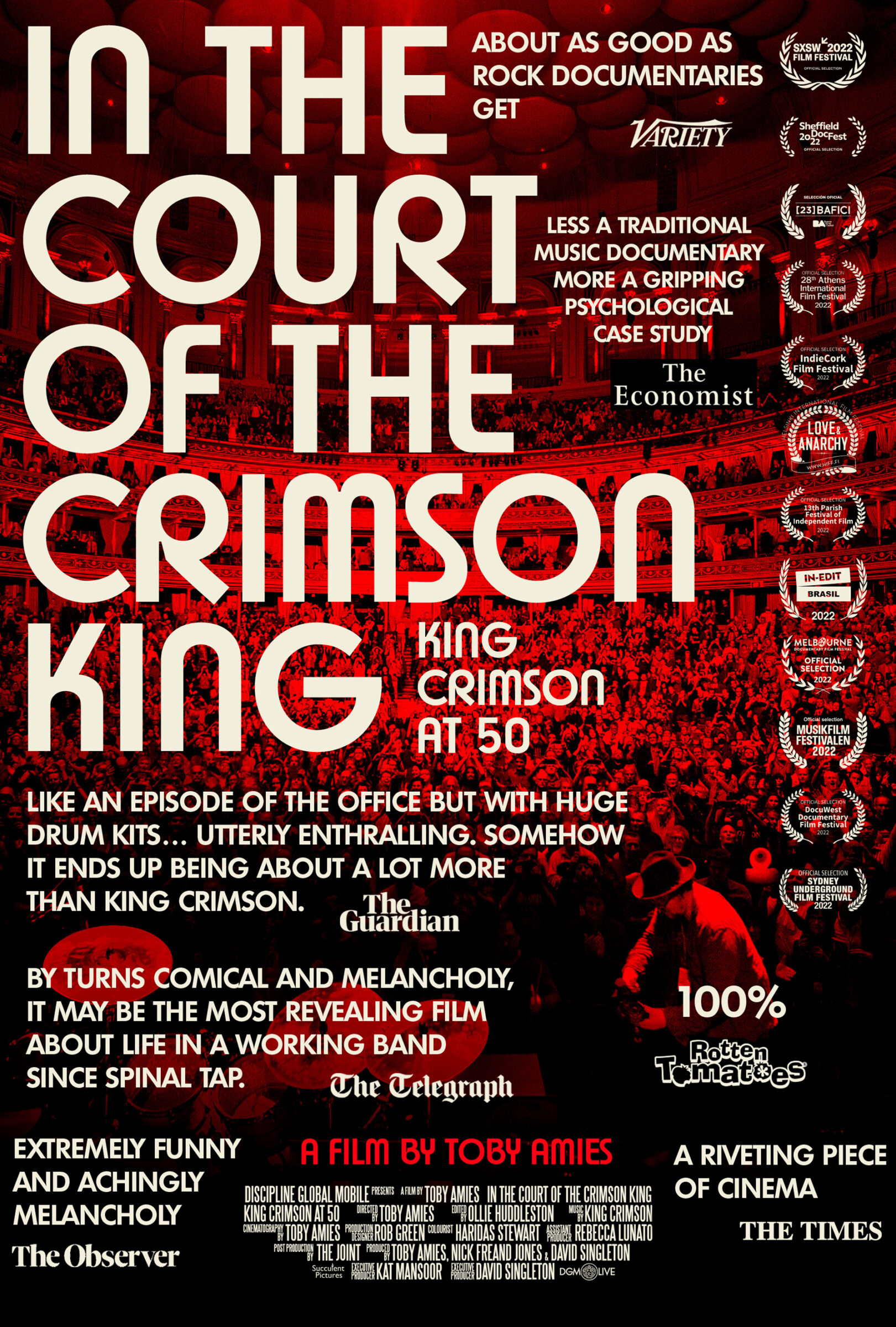
In the pantheon of so-called “progressive rock” groups, you’ll always find discussion of such bands as Yes, Genesis, ELP, Pink Floyd and a few other titans of technological trailblazing and trickery. Prog rock has generally been revered and reviled in equal percentages, but that’s no big deal… EVERYTHING is nowadays. Mention King Crimson, however, and I suspect there’ll often be a pause before the expected opinion is uttered. There’s always been something DIFFERENT, something hard to pin down about this Robert Fripp-led ensemble. You can’t just say ONE thing about them. Were they the makers of that outstanding classic rock platter IN THE COURT OF THE CRIMSON KING, the one with the cover of an enlarged mouth gone wild and the immensely pleasing vocals by Greg Lake? The unpredictable sonic architects of challenging platters like RED? The laboratory where some of today’s finest musicians, such as Bill Bruford, Tony Levin (looking cool as heck in his segments) and Adrian Belew went IN and came OUT as changed players forever? The often tyrannical experiment waged by mad overseer Robert Fripp who expected DISCIPLINE (pun intended), tireless dedication and an impossible sort of perfection from anyone he deemed worthy enough to be part of his ongoing alchemical adventure? The answer: YES. To all of that. And as the amazing documentary IN THE COURT OF THE CRIMSON KING: KING CRIMSON AT 50 makes clear, there was a lot of suffering taking place to make that art over a half-century’s duration..

“I came back from making some of that music and my hair had fallen out,” said guitarist extraordinaire Adrian Belew, whom most associate with one of the most fertile and memorable phases of the band, from 1981 to 2009. “It was so stressful to be under the microscope that way.”

“It could be a very bumpy… and lumpy ride,” Bill Bruford offered about his time in the band. “Some people handle being winded, and WOUNDED, better than others.”

Guitarist/vocalist Trey Gunn, part of the band from 1994-2003, provides an even more memorable quote about the KC experience. He compared being in Crimson to having a low-grade infection. “You’re not really sick, but you don’t feel well, either.”
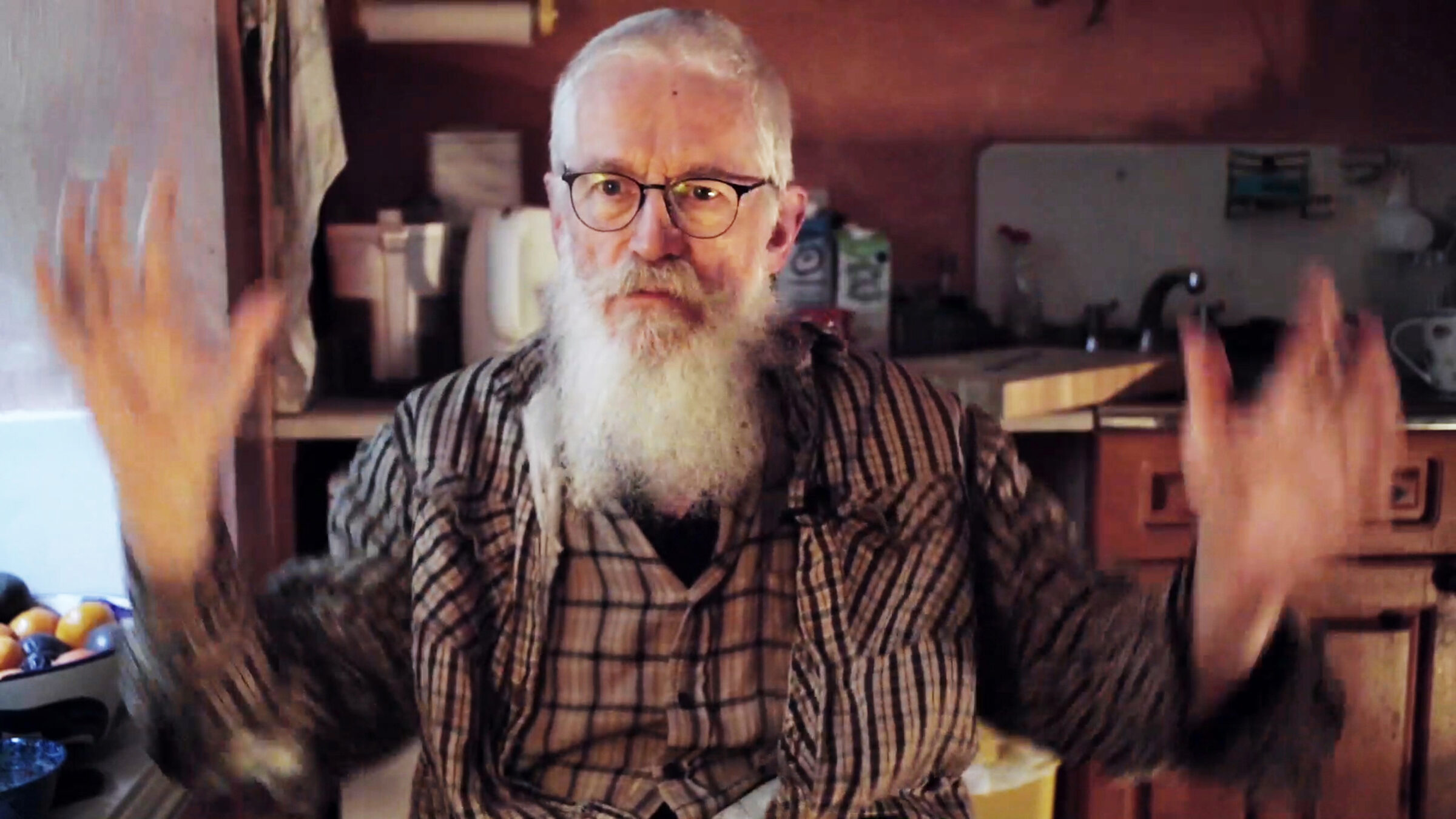
IN THE COURT OF THE CRIMSON KING (JAMIE MUIR) (screen shot)

Much has been written about King Crimson over the course of their volatile journey, and this documentary does a good job of trying to provide perspective on a fascinating musical story. A common element in any attempt to discuss the band is coming to terms with the uncompromising vision of guitarist/leader Fripp, who, as one of the most innovative guitarists of all time, had the right to pursue his musical goals and listen to what his ego commanded. But that was not always pleasant for the players, to say the least, and Fripp himself has often said he’s not always the nicest guy in pursuit of his musical ambition. Some contributors, such as percussionist Jamie Muir, didn’t last long; his work was mostly confined to the 1973 album LARKS’ TONGUES IN ASPIC.

“It’s a maelstrom of electricity,” he said in a clip from the film. “You’re in the middle of a storm, and you’ve got to stand in the middle of this storm and coherently play music. And a roaring, bellowing, regal animal tries to emerge out of something.”

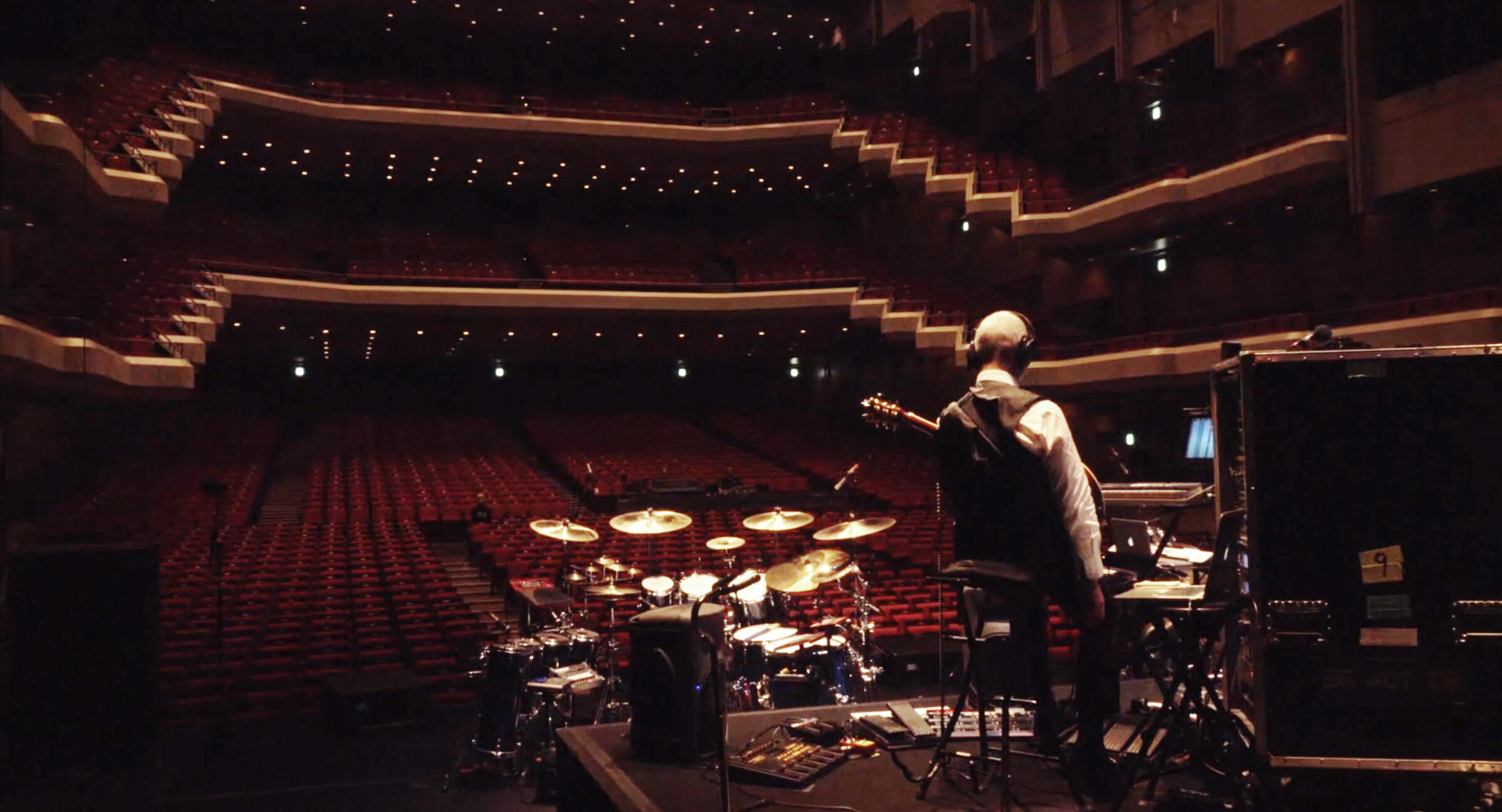
IN THE COURT OF THE CRIMSON KING (ROBERT FRIPP AND “THE GREAT SILENCE”) (screen shot)

There are plenty of clips of performances in the doc, although maybe not as many as you might want from the early days. But it’s the honest interviews with the many fabled musicians that make the biggest impression. Some, such as drummer Bill Rieflin, are not around anymore despite a prominent presence in the movie (Rieflin died in 2020 at the age of 59). There are quite a few segments that feature Rieflin, and he’s one of the more affable commentators we see. “Urgency is one of the main characteristics of Crimson music,” he relates. We see that powerful vibe in clip after clip, and Rieflin is among those who apparently thought the relentless challenge of it all was worth it, despite the “constant pain” he was in during his last couple of years. Rieflin was quite a storied musician already, having contributed his talents to bands such as Ministry, Pigface, REM and Swans among others. He was passionate about what Crimson was doing and said he was “made for it” when asked why he stayed when it was clearly so tough. “Music can restore grace, if only for a moment, in a person’s life,” the drummer related. He could have been referring to both the players and the fans. The doc shows us numerous crowd scenes of Crimson fans, clearly enraptured, bobbing their heads or staring at the band in awe. There’s a substantial segment featuring a nun, of all people, expressing her rabid enthusiasm for the band. “It goes over most peoples’ heads,” one pundit declares. “It is quasi scientific. If you get it, you really get it. Something like magic happens. But the conditions have to be so perfect. To get there… it’s so fragile.”
IN THE COURT OF THE CRIMSON KING (ROBERT FRIPP) (screen shot)

The film does not shy away from showing how bull-headed Robert Fripp often was. He was often quick to get angry, dismissive of early incarnations of the band, and actually somewhat insulting to director Toby Amies. A long and painful moment near the end of the doc shows the director waiting eternally for Fripp to answer a reasonable question. I had to check my screen a couple of times to make sure the image hadn’t frozen… but no, it was just a long, long closeup of Fripp thinking, composing some sort of response. And one of the last scenes is a direct insult, with Fripp obviously NOT quite appreciating the inherent uncertainty of what Amies was trying to do… putting together a sprawling and ambitious doc about one of the most singular and unpredictable bands in the history of rock music. Amies makes a wise decision to feature so many players in KC’s revolving door talking about their experiences… a sense of the genuinely personal and honest comes through, from pride to abject misery at times. “I just started to hate what I was hearing,” admits Ian McDonald, a KC member only in their first incarnation. “The really dark things. I hated inflicting it on the audience.”
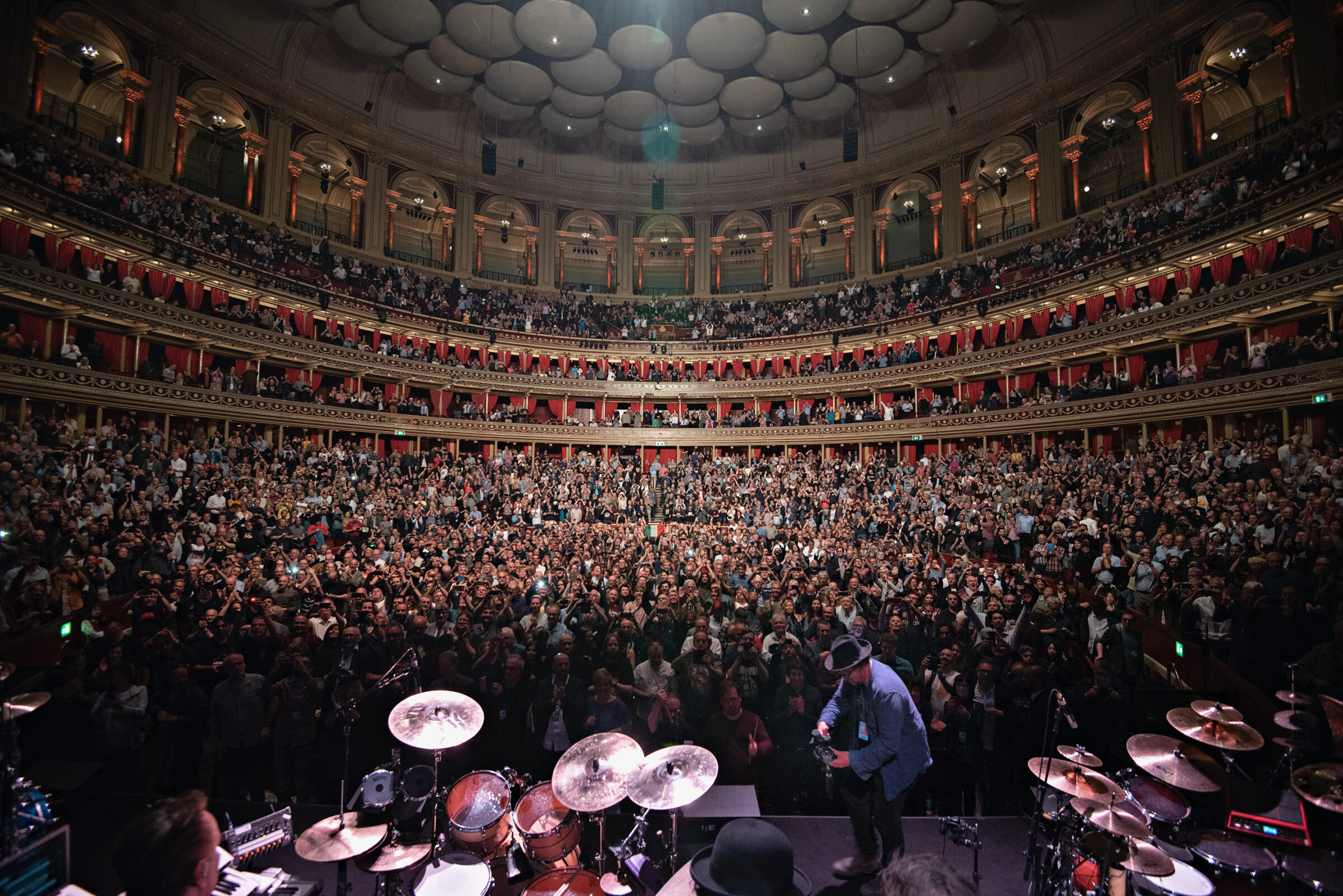
IN THE COURT OF THE CRIMSON KING (KING CRIMSON LIVE AT ROYAL ALBERT HALL) (photo credit: TONY LEVIN)

But as the passing of time (and the countless changes) have shown, King Crimson has a dedicated fan base, who LIKE the “dark things” and the less easily accessible elements of this wild and weird music. Fripp always has an intense look on his face in the doc, like he KNOWS that attaining musical transcendence is possible, no matter the hardships for the rest of the band (and, to be fair, HIMSELF) in trying to get there. KING CRIMSON AT 50 serves the fan base well and does a remarkably balanced job at portraying the tireless pursuit of aiming for the sonic UNKNOWN by a truly ambitious innovator and his band of (mostly) sympathetic comrades. Whatever your opinion of any phase of Crimson’s long career, this well-paced documentary is absolutely worth seeking out.


(EDITOR’S NOTE: As an aside for readers in the Saint Louis area, if you miss Crimson’s “live actions” or just want to see a really good band playing some very challenging music, there is a great tribute band called THRAK performing locally for your listening and dancing pleasure. Check out their Facebook page when you need to scratch that Crimson itch.)

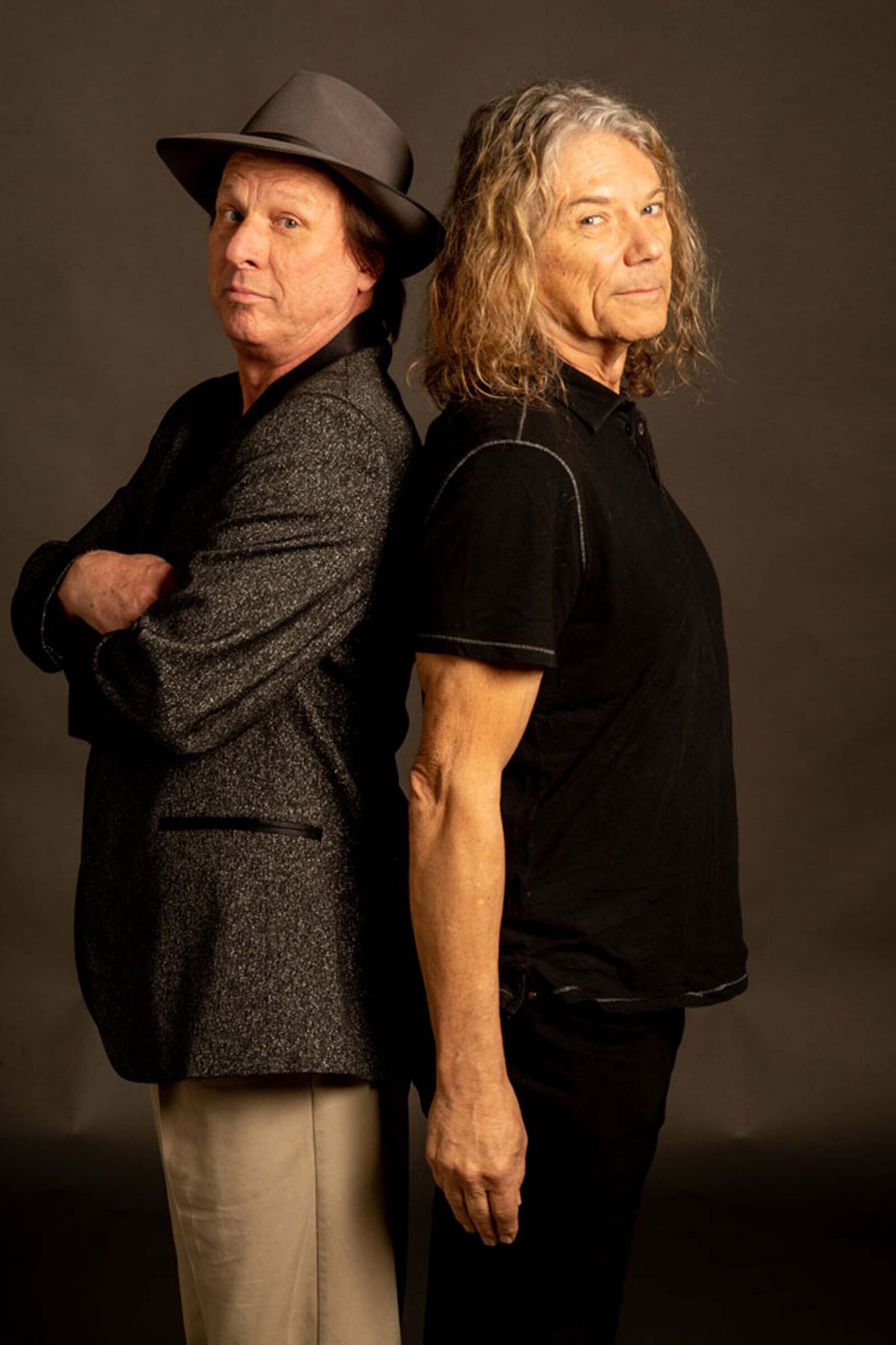
JERRY HARRISON AND ADRIAN BELEW: REMAIN IN LIGHT/COOL COOL COOL

(February 22, 2023; THE FACTORY IN THE DISTRICT, Chesterfield MO)


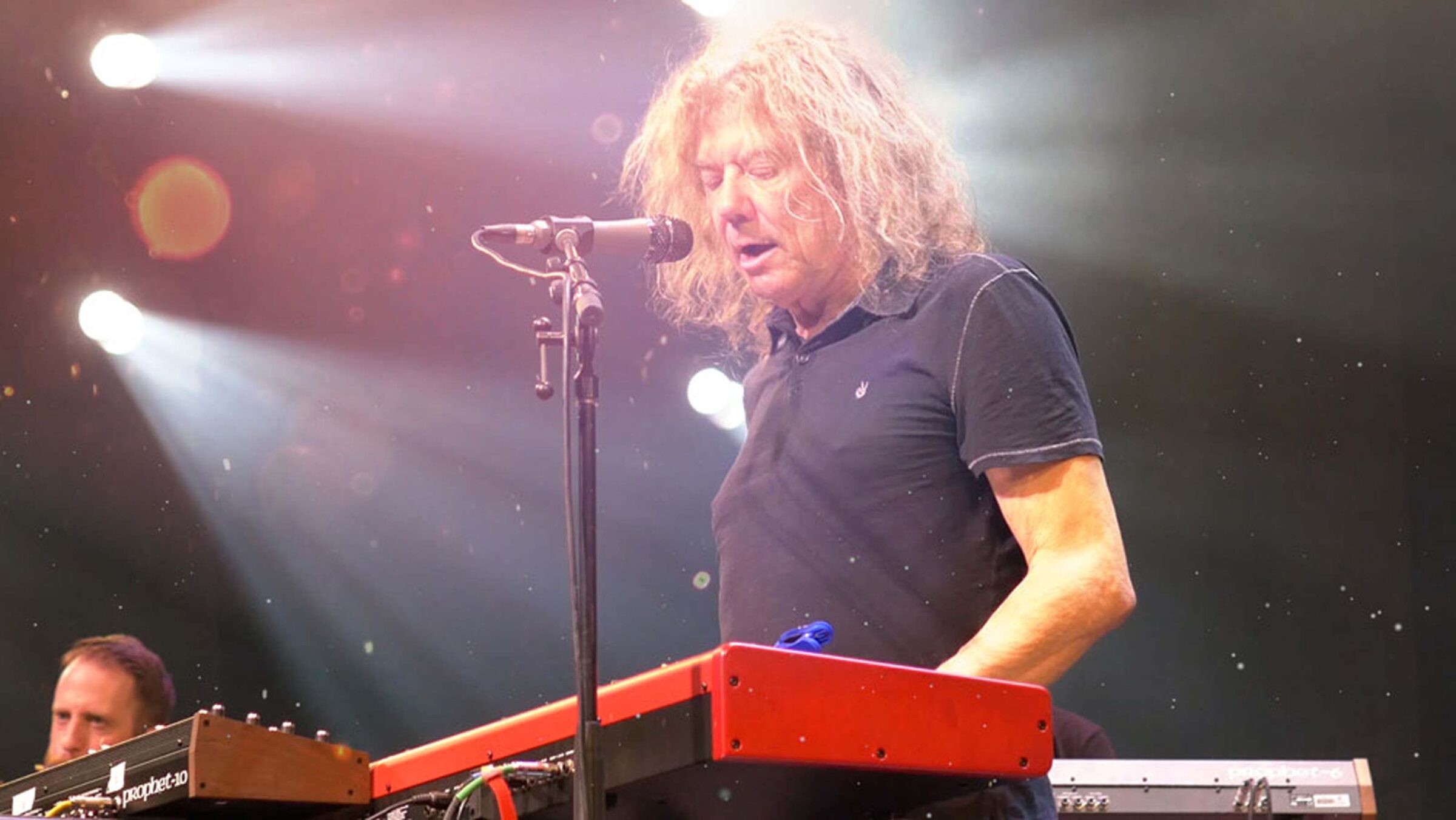
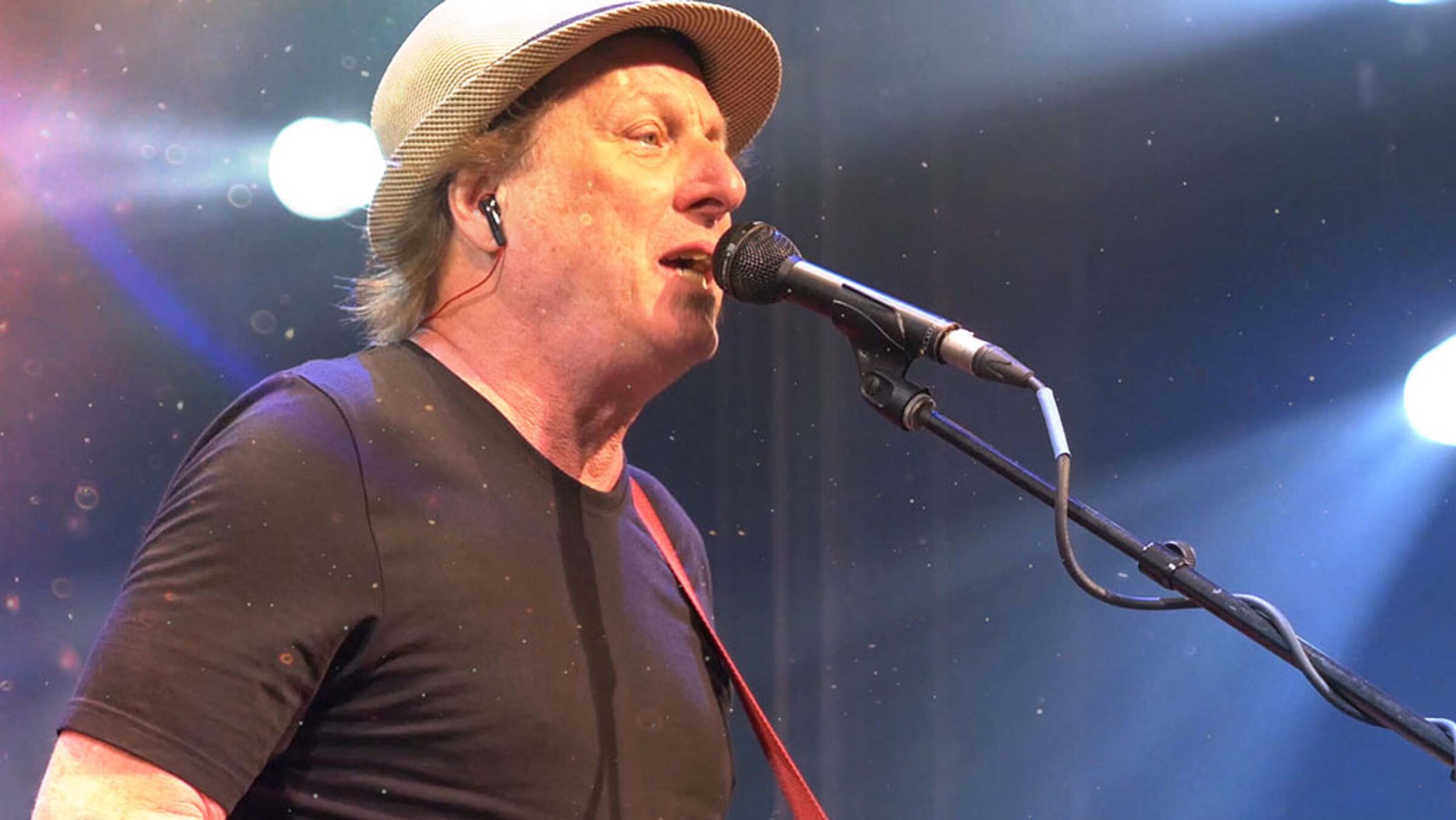
I have always been a huge Talking Heads fan, right from the beginning of their CBGB’s/weird art-punk days. I listened obsessively to their debut album when I was working at a record store, was thrilled beyond measure when my musical and creative hero Brian Eno started working with them on their second album MORE SONGS ABOUT BUILDINGS AND FOOD, and was literally ecstatic by the transcendent weirdness of their artistic peak with FEAR OF MUSIC and the colossal REMAIN IN LIGHT. I could write pages about how much I adored those two albums, but… this is a concert review, so I gotta be disciplined here. But I’m just stating unequivocally how much David Byrne, Chris Frantz, Tina Weymouth and Jerry Harrison have meant to me as a music fan and still do. I saw the Heads twice in their heyday but never got to see the REMAIN IN LIGHT stuff performed live, until Harrison and Adrian Belew put together this amazing touring show with former members of Turkuaz, now renamed as Cool Cool Cool. I could not pass this show up, and although I had some personal circumstances that were daunting, I soon found myself venturing to the Factory in far St. Louis County for the first time. I was eager to see how these performers were going to make up for the lack of vocalist David Byrne and killer rhythm section Chris and Tina, one of the best EVER.

JERRY HARRISON AND ADRIAN BELEW: REMAIN IN LIGHT TOUR (ADRIAN BELEW, JERRY HARRISON) (photo credit: MICHAEL WIEINTROB/REMAIN IN LIGHT)

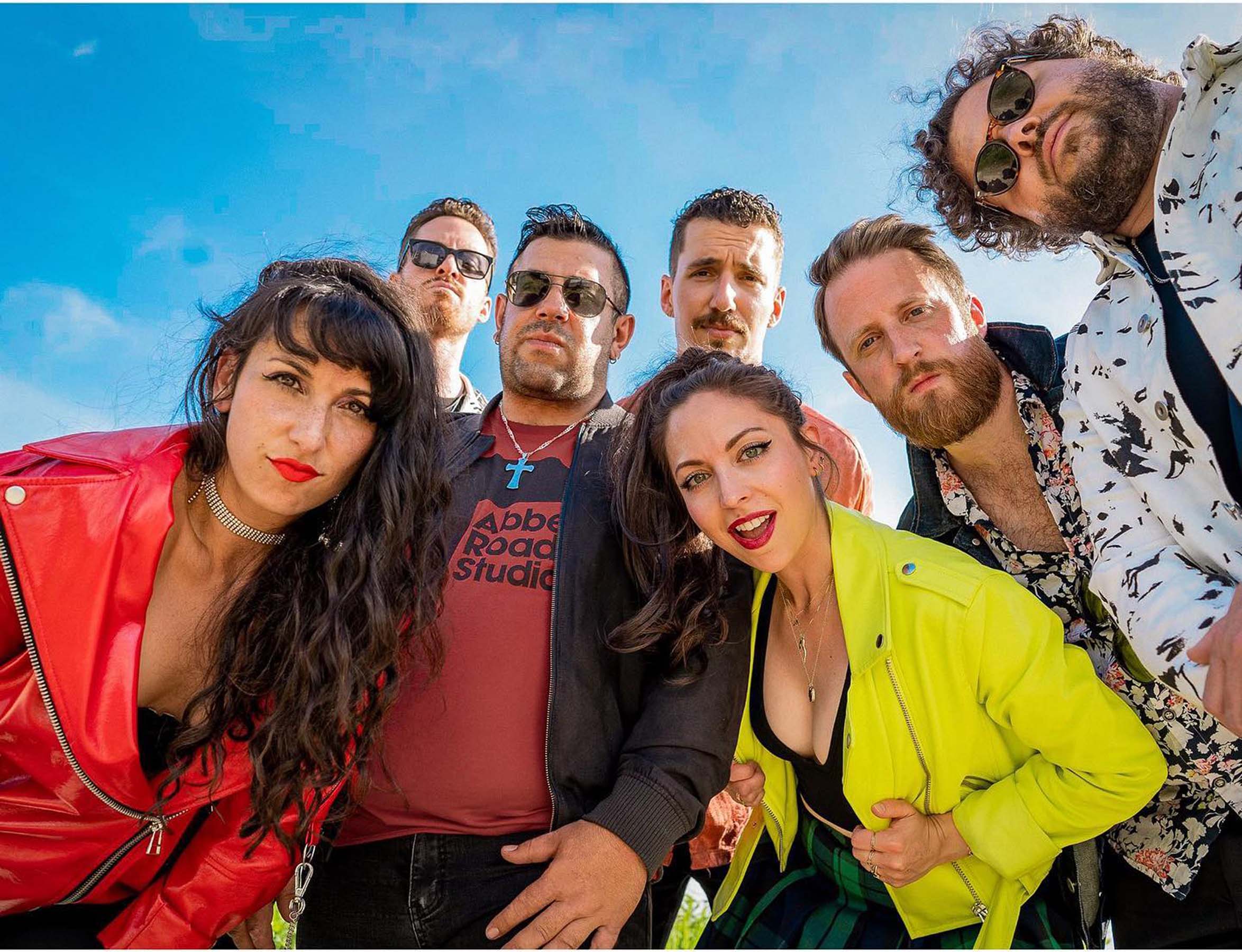
Cool Cool Cool opened the show with their expansive ensemble rhythmic funk, impressing with sterling musicianship that include a three-piece horn section, two percussionists and the delightful high-energy vocals of Sammi Garett and Shira Elias. It was a pleasant danceable mix, and the audience responded with enthusiasm. But there was definitely a feeling of anticipation in the air about what everyone had come here to see. Jerry Harrison had planned a “REMAIN IN LIGHT” celebration since before the pandemic, when his plans with Belew were derailed by an industry-halting nightmare. Once things returned to relative normalcy, the two legends revived their inspired plans, and you could be forgiven by perhaps thinking that doing something like this without Heads leader David Byrne might be a daunting proposition. But two key factors made this an absolutely thrilling show. First, Harrison and Belew were aiming to recreate some of the feeling of the legendary STOP MAKING SENSE tour that Jonathan Demme captured so amazingly in his film, where an extended cast of players could add layers and layers of sonic details to the blend both vocally and rhythmically… as well as the notable 1980 concert in Rome that a huge audience blissed out to and that the Heads themselves have pointed out as a career high point (Belew was part of that show, and it’s still available to see on YouTube). Secondly, the smart decision was made to have different musicians taking lead vocals depending on the song and who sounded best on it. Hence Belew sang lead on “Psycho Killer,” a surprising “Drugs” and a genuinely riveting “Life During Wartime,” which gained obvious rich thematic resonance due to the savage ongoing war in Ukraine. Harrison sang lead effectively on “Houses in Motion,” which was fab. But maybe the biggest surprise of the night was the strength of the vocals by “Cool” member (and baritone sax man-handler) Josh Schwartz, a tall bespectacled fellow at stage right who didn’t “Byrne it” so much on lead vocals as he “interpreted energetically” on songs like “Crosseyed and Painless,” “Born Under Punches” and the utterly transcendent classic “Once In a Lifetime.” These three songs transported me somewhere I haven’t been in years: I wrote in my notes “shivers of joy,” as such were traveling up my spine especially on the latter two songs. Besides the effectiveness of the insistent rhythms we were treated to, I cannot say enough about the hypnotic backing vocals of Sammi Garett and Shira Elias on these and other songs here. Whether it was their repeated “I’m STILL waiting” on “Crosseyed…, ” or the unbelievably transfixing phrases like “All I want is to breathe,” and “and the heat goes on” in concert high point “Born Under Punches” and the insistent “letting the days go by” and various water references in “OIAL,” these two ladies absolutely killed it musically. As a fan of backing vocals and repeated refrains and a recording artist myself lately, I just LOVE this aspect of music, and part of the true GENIUS of the album REMAIN IN LIGHT is how much of that kind of thing listeners were treated to, courtesy of the Talking Heads’ evolved aesthetic by that point and the crazy machinations of producer Eno in the studio. The gals also had their bigger than usual moment on “Slippery People,” a gospel-flavored workout in which they essentially sing lead on much of the song. Truly wonderful. It was also wonderful to hear “I Zimbra” from the FEAR OF MUSIC album, another chance for Schwartz to take the lead at the mic, even though this is certainly a group-based number, with its singular challenge of chanting made-up lyrics over tribal-sounding sonics.

JERRY HARRISON AND ADRIAN BELEW: REMAIN IN LIGHT TOUR (JERRY HARRISON) (photo credit: REMAIN IN LIGHT)
JERRY HARRISON AND ADRIAN BELEW: REMAIN IN LIGHT TOUR (ADRIAN BELEW) (photo credit: REMAIN IN LIGHT)

Okay, we gotta pause and single out Adrian Belew here. Holy effing shit. This guy is one of the most distinctive and trailblazing guitarists in the history of rock, and his leads are very much present throughout REMAIN IN LIGHT. Everything you were probably hoping to hear him do in this concert was firmly on display. I was writing down phrases like “great piercing lead by AB” in my notes on “Crosseyed and Painless,” “Houses in Motion” and others as fast as I could scribble, noting the smile on Belew’s face so much of the time, which I could see through my binoculars. Belew nodded to his long tenure with King Crimson by performing the band’s “Thela Hun Ginjeet” and sidling up to the fetchingly attired, chorus-sharing Garett, who was clearly having a ball all night. So was I, for sure! I was a happy man to be able to experience such tunes as “Cities” and my mega-favorite “Once In a Lifetime” and pretend I was approximating the joy any true fan must have felt experiencing the Heads at their performing peak. As for Harrison, he did a great keyboard solo on his own tune “Rev It Up” and served up the “quirk” on “Slippery People” and others. Harrison doesn’t always get credit for the delightful flavoring his insistent repeated keyboard parts added to the Heads’ oeuvre, and certainly classics like “Once In a Lifetime” wouldn’t have attained their legendary status without his work.

COOL COOL COOL (SHIRA ELIAS, CHRIS BROUWERS, MICHAEL CARUBBA, GREG SNADERSON, SAMMI GARETT, JOSH SCHWARTZ, CRAIG BRODHEAD) (uncredited publicity photo)

A spirited “Take Me To the River” found the whole ensemble wringing every bit of iconic juice out of a song that we all know extremely well, with the ladies adding drama by repeating the two-line refrain over and over, singing it more and more quietly (which the audience was noticeably riveted by) and then kicking up the volume at the end for a glorious climax. On both the floor and the balcony, contingents of people were dancing happily. There HAD to be an encore, of course, and Belew said “Are you sure?” to the audience when the ensemble was summoned for their expected callback. I was CERTAIN the song would be “The Great Curve,” the only RIL classic not already played, and I was right. It was thrilling, powerful and very much the rhythmic and danceable classic of its original incarnation. What an ensemble! What a show! Many people have listed REMAIN IN LIGHT as one of their “ten favorite albums of all time,” myself included. I was thinking about that in the waning moments of the concert, WHY that album made such an impact. Was it the reinvented afrobeat sound for a modern audience? Talking Heads leaping beyond their quirky art rock to another dimension? The timeliness of that album and its hit “Once In a Lifetime” finding a fresh audience at the dawn of MTV? Sure, all of that. But my own phrase is “transfixing weirdness,” captured on the album like few others at the time. Hearing Harrison, Belew and the very inspired members of Cool Cool Cool doing powerful justice to a beloved album which is unlike anything else ever released… weird, life-affirming, body-moving and consistently challenging and mysterious… made me very happy. Kudos to these immensely talented musicians for coming up with a great idea, and then carrying it off so thrillingly.

FINDING A WAY TO ROCK: SARAH BORGES LIVE PREVIEW

We were all hit hard by the COVID-19 lockdown. Even if we managed to stay healthy, we all know at least one person who was sick; if we were lucky, we didn’t lose anyone close to us. Being separated from loved ones was tough, having to rearrange our lives because of this virus was maddening. A lot of people were forced to say home, work remotely or, in extreme cases, lost their jobs, their livelihoods. One of the worst hit industries was entertainment: We couldn’t go see a live show, they couldn’t play live. A working musician’s “bread and butter” is playing live, meeting the fans; selling their merchandise (T-shirts, CDs, albums… ) makes up a very large part of a touring musician’s income. The need to play and create new music is built into a musician’s DNA. So it was that Sarah Borges recorded her new album, TOGETHER ALONE, released earlier this year, working with longtime producer Eric “Roscoe” Ambel and several bassists and drummers remotely. The cohesiveness of the album’s ten tracks is testament to the drive and determination to create.

SARAH BORGES live with KEITH VOEGELE (photo credit: BRYAN BOLEA)

Now, with Sarah coming to Off Broadway, one of Saint Louis’ coolest (and my personal favorite) venues, we spoke to her about what we can expect on August 24. “Well, you know, we’re touring in support of our newest record, which is called TOGETHER ALONE. It came out in February. And we recorded the record pretty much remotely during the lockdown portion of the pandemic so, luckily for me, the guys who play bass and guitar on the record, which are Keith Voegele from the Bottle Rockets and “Roscoe” Ambel, who produced all those Bottle Rockets records… they’re in the touring band, too, so… and, it’s rounded out by our drummer Kenny Soule. But the way we work it is, I play some songs from the record and then Roscoe will sing a few, play ‘em… we kinda trade back and forth during the show, lots of harmonies, lots of banter in between. It’s really fun, ya know? I kinda feel like, I’ve been doing this a long time and I’m so grateful to still be doing it. Every show is fun.”

SARAH BORGES (photo credit: LIZ LINDER PIX)

Packing in tunes from Sarah’s eight albums, as well as music from Ambel’s bands, the Del-Lords, Roscoe’s Gang and the Yayhoos and… maybe a few surpsises, the evening should be a good one! With traces of the Beatles – especially George Harrison – wandering through the remotely recorded TOGETHER ALONE, the new songs have a friendly, poppy sound that really allows Sarah to get into the vocal arrangements without being too in-your-face. I, for one, am looking forward to hearing these new tunes performed live. Nick Gusman opens the show. Tickets are available at offbroadwaystl.com, at the door day-of-show and from the usual ticket outlets; more information is also available at the venue’s website. See you there!

THE BEATLES: GET BACK

(DISNEY PICTURES/APPLE CORPS LTD/WINGNUT FILMS (468 minutes; Rated PG-13); 2021)

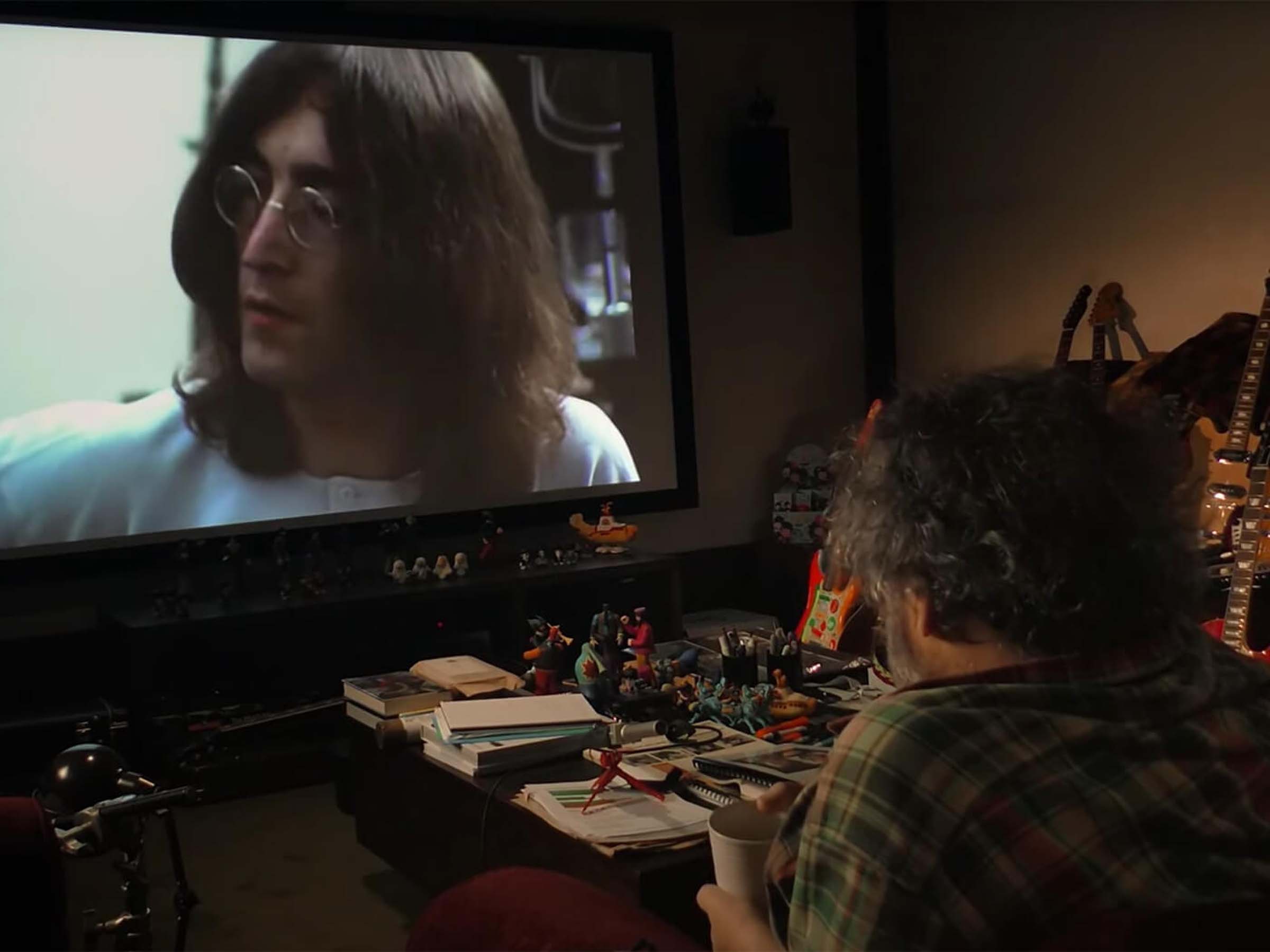
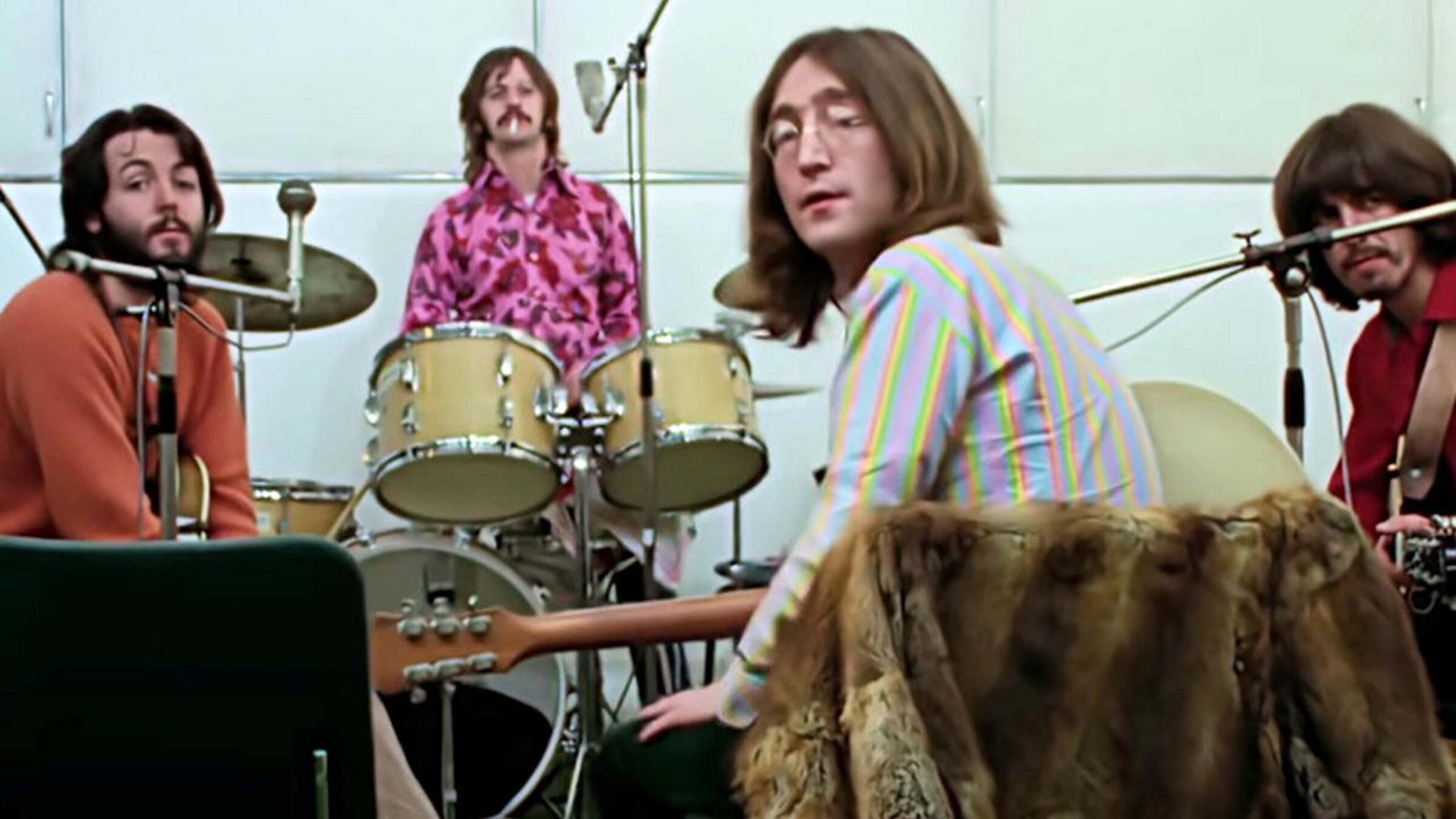
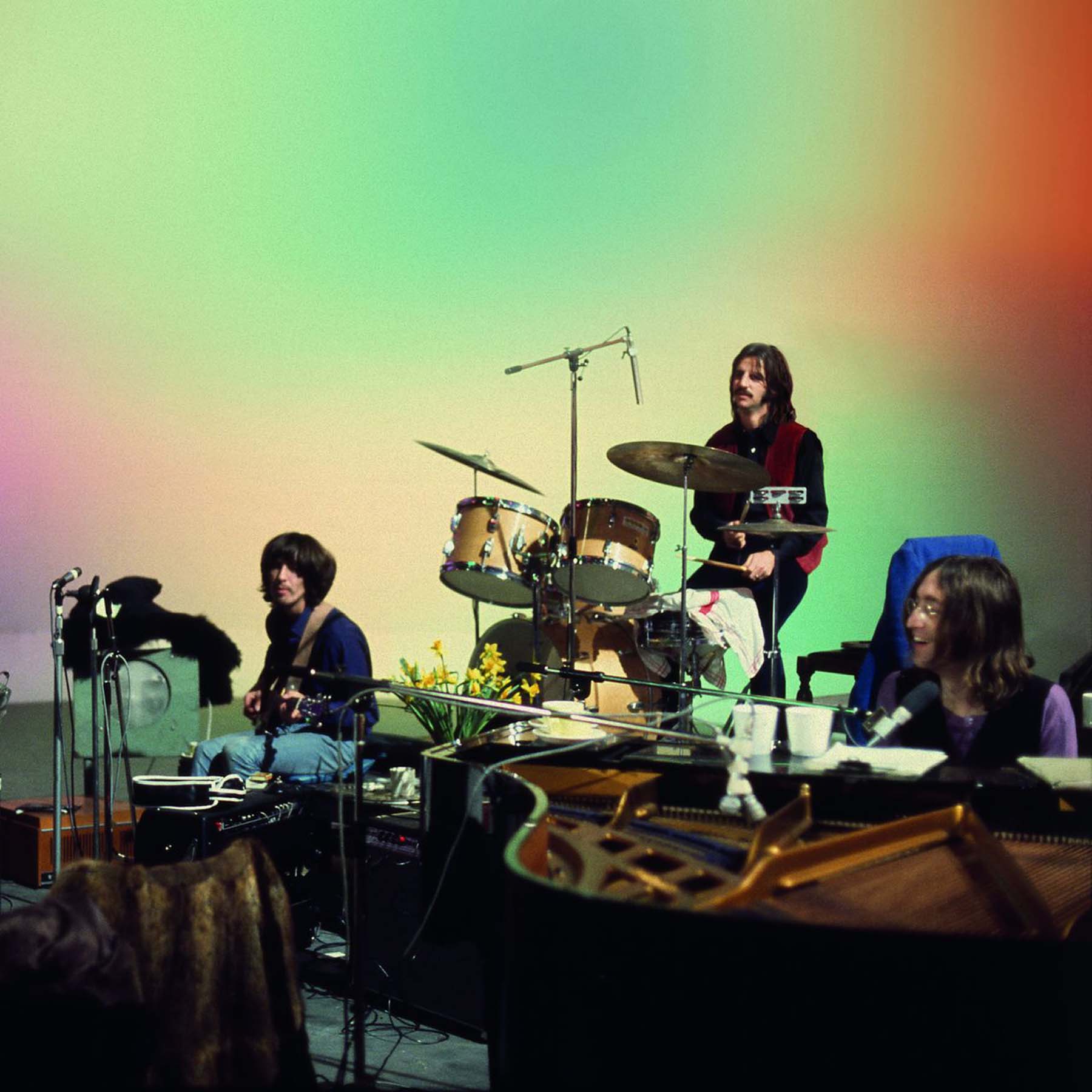
You can’t really argue that GET BACK, the new three-part documentary directed by Peter Jackson about a pivotal month in the life of the Beatles during their last year together, isn’t THE cultural media event of Fall 2021. It’s been talked about for months, Paul McCartney himself did an NPR interview in which he discussed it, and it aroused the emotions of Beatle fans everywhere when the pandemic caused the project to morph from an intended theatrical film to a much longer documentary to be streamed exclusively on Disney+, the company’s streaming service, for three nights over the Thanksgiving holiday. Speculation in advance was intense, as one contingent of fans feared it would “whitewash” the long-discussed tensions of the Fab Four in their final days (which the previous LET IT BE documentary certainly left one with knowledge of), and another contingent waited for validation of long held beliefs: that Yoko broke up the Beatles, that Paul was a dictatorial tyrant in those last days, that George Harrison had simply had enough and stormed out in anger, and that the lads were simply incapable of working together creatively anymore after the many pressures of being the most successful and influential rock band in history.

THE BEATLES: GET BACK (John Lennon, Peter Jackson) (publicity still)

Well, then. New Zealand’s legendary director Jackson, never having been shy about tackling enormous, “impossible” projects (remember that LORD OF THE RINGS thing?) has a mega documentary for YOU! And guess what? You can put everything you thought you knew about the Beatles’ final days aside, and marvel at the intimate scope and cumulative effect of this roughly eight-hour saga and the many revelations it contains. First, some clarity: This is not really a film about the “final days” of the Fabs. What we have here is a cinema diary of just over three weeks from January 1969, when the band was working on a planned project that became LET IT BE, intended to be a film, album and concert that would capture their intention to “get back” to a more youthful, spontaneous atmosphere that’d harken back to… well, when they were more youthful and spontaneous. A look at the ACTUAL last days of the Beatles would focus on the ABBEY ROAD recording, the massive tensions created by Allen Klein being hired to manage their financial affairs (a pivotal decision supported by all but McCartney, who fought it tooth and nail and had to sue the other three to put an end to Klein’s shady practices), and John Lennon’s increasing desire to be with Yoko and do his own thing instead of being wrapped up in the monstrous machine that was THE BEATLES. You see all the seeds of this stuff in Jackson’s doc: Klein is introduced in the latter half of it, Yoko is seen at John’s side throughout most of the footage, and songs that later appeared on ABBEY ROAD are indeed rehearsed and talked about in many segments. But no, this is NOT an investigation of what broke up the Beatles. Jackson was given access to 60+ hours of unseen video and roughly 150 hours of unheard audio, and from this massive trove, he culled together a day-by-day record of what John, Paul, George and Ringo were doing during those fabled days first at Twickenham Studio (where they were under pressure to get stuff done before the movie THE MAGIC CHRISTIAN was to take over the place, starring Ringo and Peter Sellers), and later at #3 Saville Row, home to the Beatles’ own Apple Records label. The band had a reasonably interesting project in mind; you can’t fault their intentions, and all seemed eager to dive in and work after a fairly long break following the White Album. But things did NOT go smoothly, and we see quite clearly that they were in over their heads, unable to figure out WHERE to stage a live performance, WHICH songs to record and HOW to carry on efficiently without a “daddy figure” (as McCartney refers to Brian Epstein, who’d previously sheltered the boys to some extent from the worst tensions brought on by fame and industry pressures). Jackson had an absolutely daunting task here: All this footage has been buried in a vault for half a century, and the Beatles clearly had NO taste for delving into a pile o’ stuff that would, rumor had it, show them in their worst moments, unable to cooperate with each other long enough to simply record a new album and go on about the business of being the world’s biggest band.

THE BEATLES: GET BACK (Paul McCartney, Ringo Starr, John Lennon, George Harrison) (publicity still)

Except, that is not what happened. The story was WAY more complex than that, and not nearly so bleak. This amazing documentary allows us to travel back in time and be “flies on the wall” at the daily recording sessions, where the four lads discuss various songs and impulses, jam spontaneously, and gradually shape the compositions that would eventually become the songs most of us know like the back of our hands by now. Repeated segments showing the evolution of songs such as “Get Back,” “Don’t Let Me Down” and “Two of Us” are fascinating, and from a songwriting point of view, the insight into the process is invaluable. You may get sick of some of the repetition, but I’m pretty sure most committed Beatles fans won’t mind at all. To see how “Get Back” evolved from being a “protest song” about immigrants to a more aesthetically vague pop/rock tune that the boys agreed should be the next single, is captivating. And “Two of Us” has layers of resonance about the close relationship between Paul and John, both in the actual lyrics of the song (“You and I have memories/Longer than the road that stretches/Out ahead… “) and in the discussions we are privy to about the arrangement, in terms of whether it should be a simple acoustic song or something more sonically dense, with many scenes showing the two most famous songwriters working closely together to try to get it right. They ALL want to do that, and these things take TIME. Plain and simple. We see them getting impatient, making fun of themselves, and trying various things over and over. It could and does get tedious at times. The infamous exchange between Paul and George where the latter mutters that he’ll “play anything you want, or I won’t play at all if it will please you… ” that was a focal point in LET IT BE, occurs here with much greater context, that primarily being that Paul was trying to be the taskmaster and keep the group focused, not only on specific arrangements but on getting things DONE in a timely manner. With the full backdrop of the proceedings on display here, it’s pretty reasonable, and George’s impatience is understandable, not because McCartney was a jerk, but because “it’s all too much” at times. Plain and simple.

THE BEATLES: GET BACK (Paul McCartney, George Harrison, Ringo Starr, John Lennon) (publicity still)

George, of course, does walk out for a while; every essay about this documentary has talked about that. In 1969, Harrison was truly coming into his own as a songwriter, and there are two pivotal scenes that deal with this. A remarkable private conversation between Paul and John is captured on audio. John declares, “It’s like George said, he didn’t get enough satisfaction anymore because of the compromise he had to make to be together… it’s a festering wound that we’ve allowed to… and yesterday we allowed it to go even deeper, and we didn’t give him any bandages.” Paul is listening, clearly, and responds: “Yeah, we treat him a bit like that. See, because he knows what we’re on about. But I do think that he’s right. That’s why I think we’ve got the problem now, the four of us. You go one way, George one way, and me another… “

THE BEATLES: GET BACK (George Harrison, Ringo Starr, John Lennon) (photo credit LINDA MCCARTNEY/APPLE CORPS LTD)

The revelatory conversation continues with John openly stating he’s intimidated at times by Paul’s insistence on certain arrangements, and how he’s sometimes given up speaking out in favor of his own thing. He admits that “sometimes you’re right” to Paul, but that other times he has disagreed with the final results. In the context of all we know about the Beatles, this is just groundbreaking, to have this inside look at a tension-packed time. Meanwhile, we’re all aware of what was coming next for George Harrison. He was writing tons of new songs, including numbers like “All Things Must Pass,” “Isn’t It a Pity” and a little tune called “Something.” A much talked-about scene shows George struggling with the line to follow “Something in the way she moves/Attracts me like… ” Lennon comically suggests singing anything at all until a good fit is found. “Attracts me like a cauliflower,” he suggests, and a different scene shows George singing “attracts me like a pomegranate.” This is all pretty amusing, but when you step back for a moment and realize you’re seeing one of the greatest songs ever written in its infancy, a song that was obviously one of the highlights of the Beatles’ soon-to-be final studio album, ABBEY ROAD, you can’t help but be totally caught up in George’s place in music history right here. There’s a separate conversation between John and George where the latter tells John he’s written about “20 new songs” and that it would take ten more Beatle albums to get them all out there at the current rate of “two George songs per album.” George suggests he may just have to do a solo album, something which at first surprises John, and then seems to turn a light bulb on in his head. We all know what actually happened, and it’s simply another revelatory moment. So is seeing George being the pragmatic one through most of this documentary. While the others are brainstorming ludicrous ideas like doing a performance at an ancient historical site in Libya, or taking a selected group of fans on a large ship across the ocean to be the audience for whatever they’re gonna do, George wryly declares “We can’t even get Fender to send us a free amp.” This documentary will almost certainly increase your respect for George Harrison and his importance to the Beatles…

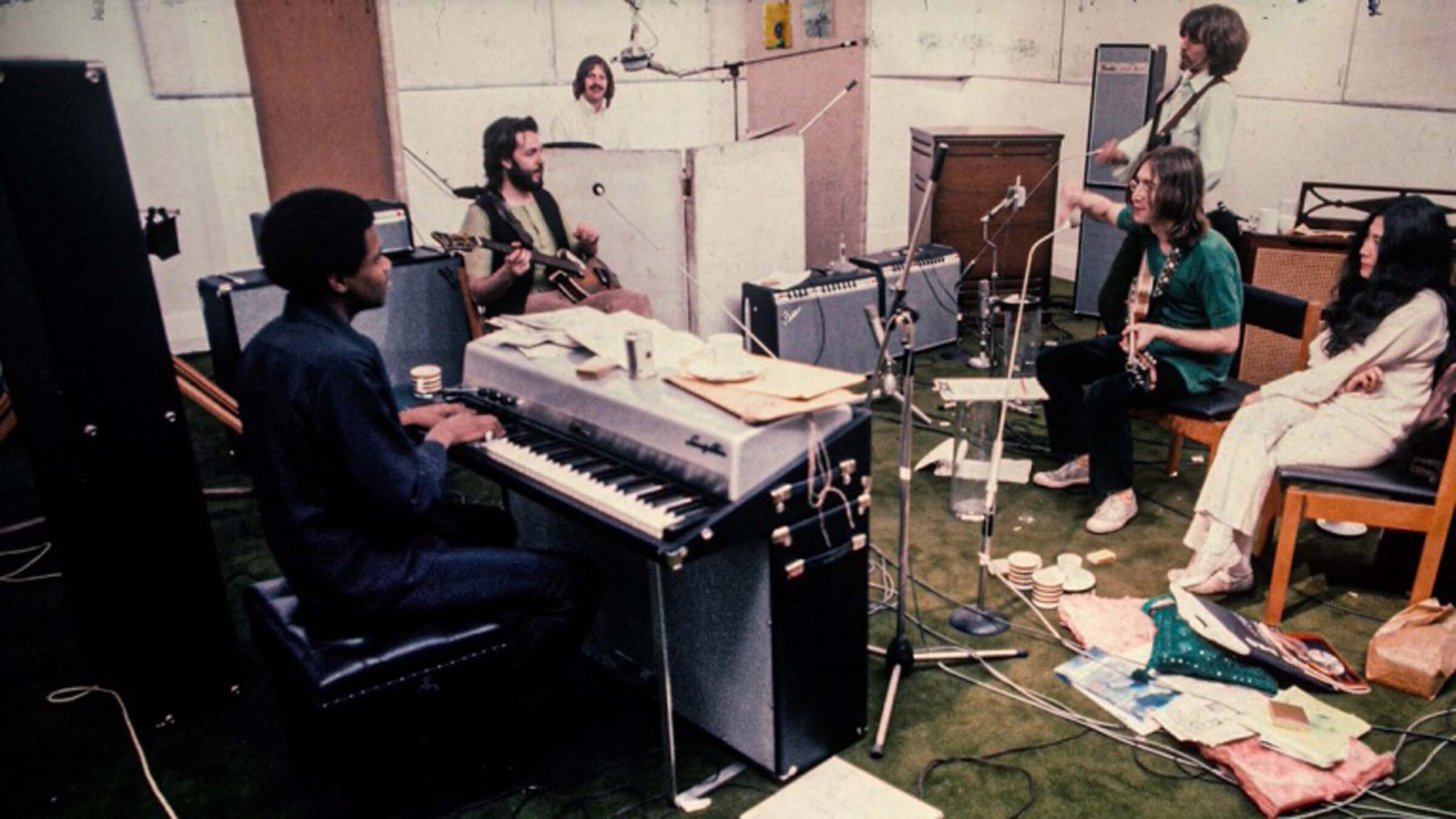
THE BEATLES: GET BACK (Billy Preston, Paul McCartney, Ringo Starr, John Lennon, George Harrison, Yoko Ono) (photo courtesy: THE BEATLES)

Does the film show Paul McCartney as a raging egomaniac? No, because they ALL clearly were. Remember, they were already the most famous group in the world with endless expectations heaped upon them everywhere. We get to see various members reading their own press at the time, richly entertaining, including George reading a bit about him and John coming to physical blows, an event that did NOT actually happen. Paul is definitely shown paying the most attention to specific song arrangements, and the reality of trying to meet their deadlines, but he is about collaboration all the way. It’s amazing to see him and John working together closely; you really WANT them to figure everything out and keep making remarkable music. Songs that never became official Beatle songs are given bits of time, such as McCartney’s “Teddy Boy” and “Another Day” and Lennon’s “Gimme Some Truth” and “Child of Nature,” which would in a couple of years morph into “Jealous Guy.” And wow, is there some fun seeing early versions of ABBEY ROAD tracks like “Maxwell’s Silver Hammer” (showing Beatles road manager Mal Evans banging a device gleefully), “She Came in Through the Bathroom Window,” and “Polythene Pam” enter the picture. Everything is a question mark in this film: WHAT songs will they record? WHAT songs will they play for whatever live concert they are going to do? How can they possibly deliver when they feel they only have maybe half a dozen songs with fully developed arrangements?

THE BEATLES: GET BACK (Paul McCartney, John Lennon, George Harrison) (photo courtesy DISNEY PICTURES)

But what is NOT yet truly a question: Are the Beatles going to break up? NO, that is not yet obvious. There are no “fights” in the conventional sense here; the lads are having a good time, they clown around, they crack jokes. It’s surprising in particular to see how good-humored Lennon is most of the time. He’s happy to have Yoko around (SHE, by the way, is almost continually a gentle presence, never intrusive, and even defended by Paul in a couple of scenes (“they just wanna be together, you know… “). With remarkable foresight, Paul declares in one scene, “Wouldn’t it be funny if in 50 years people say, ‘Oh, Yoko broke up the Beatles because she sat on an amplifier?'” So there’s plenty of myth smashing in GET BACK. When this footage was being shot by original LET IT BE director Michael Lindsay-Hogg (looking more youthful than you’d think and probably a bit in over his head), there were still several possible futures for the Beatles. That is crucial, because this film is NOT a breakup film. It’s about ambition, mega fame, the ups and downs of collaboration, artistic egos stretched to the limit, and problem solving on a grand scale. Watch the happy look on John Lennon’s face when keyboardist Billy Preston enters the scene and shows effortlessly that he can spruce up the arrangements on some of these new songs. “You’re IN the band!” Lennon tells him. Watch a fetching Linda Eastman and her energetic young daughter Heather, respectively, holding hands with Paul and taking photos (Linda and Paul were two months away from their fabled wedding at the time of this footage) and dancing around the studio gleefully, exuberant as a young girl could be. And watch, for the first time, the legendary “rooftop concert” in its entirety, the Beatles’ final live appearance, which of course was filmed on top of Savile Row, to the delight of some on the street below and the consternation of many others, including the British bobbies, who amusingly try to shut things down because of complaints. People on the street are interviewed and shown in effective cross cuts as the Beatles play, reflecting a reasonable cross section of opinions. This is music history, folks. But it’s told in a fresh, fascinating manner that changes what we thought we knew about the Beatles. And Peter Jackson wisely avoids any present-day interviews… he stated his desire to avoid that sort of thing. Nope, this is time capsule stuff, our unique opportunity to experience what the Beatles were going through in January of 1969.

THE BEATLES: GET BACK (Ringo Starr, Paul McCartney, John Lennon, George Harrison) (photo courtesy: APPLE CORPS LIMITED)

It’s amazing, honestly. What was to follow was the group throwing up their hands in despair at their inability to complete the planned album (in a still controversial move, the whole thing was handed over to Phil Spector, resulting in an album that almost no one would be completely happy with), a stunning decision to record a brand-new studio album that would give George Martin one more chance to fully produce the band, George Harrison a chance to show he’d finally equalled the others in songwriting prowess, and give McCartney a chance to spearhead perhaps the greatest medley ever featured on a rock album; a furious legal battle over Allen Klein and the failure of the other three Beatles to stop McCartney from releasing his debut solo album BEFORE the release of LET IT BE (the accompanying press at the time appeared to show McCartney “officially” announcing the end of the Beatles, even though that isn’t quite accurate), a disbelieving fan kingdom unwilling to believe it was “the end,” and of course, lots and lots of nasty comments and bad feelings. But that was what would FOLLOW the events in GET BACK. It is NOT what we see on screen, which is in fact an energetic, lively, mostly upbeat look at an intense collaborative period by four of the most famous musicians in history and their handlers, all trying to respond to the immense pressure of gargantuan fame. GET BACK really is a treat, if sometimes a patience-testing experience, that will be richly rewarding for dedicated Beatles fans. You won’t forget it if you watch it with focus and attention. There are scenes that are simply stunning in what they tell us, all these years later. And it’s invaluable as a detailed look at the creative process itself. Sure, it’s a pain to have to find a way to get Disney+ in order to watch this thing. But do it. Really. There has never been a documentary as insightful and surprising, in musical terms, as THE BEATLES: GET BACK. We owe Peter Jackson a debt of gratitude for pulling this off, and let’s be happy for Paul, Ringo and the wives of John and George, for seeing a critical record set straight at last.

UPDATE: Since this review was written, a DVD of the film was scheduled for release in February 2022. Apparently, a few copies managed to make it into the hands of some lucky fans, though once Amazon’s stock was depleted, the Disney Company pulled the package from its schedule and in April announced that the title has been delayed indefinitely due to “authoring challenges.” It now appears that the DVD and Blu-Ray editions will be released, at least in the UK, on July 26. The three-part docuseries is still streaming at Disney+.

HEADHUNTING FOR FUN AND PROFIT: THE KENTUCKY HEADHUNTERS LIVE PREVIEW

They’re a little bit Donny and a little bit Marie… and a little bit James Brown and a little bit McKinley Morganfield… maybe even a little bit Woody Guthrie. The music of the Kentucky Headhunters is permeated with an amalgam of everything that is American music. The boys from the heart of Kentucky are a lean and not-too-mean Rock and Roll machine, hitting on all four cylinders. Like the rest of the world, Greg Martin, Fred Young, Richard Young and Doug Phelps found themselves with jobs that they couldn’t go to and, in a couple of cases, they were put low by the virus that held us all prisoners for nearly 30 months. Guitarist Martin said that the band was just “crawling out of the wreckage” in 2021, reconvening in February to record what became the album THAT’S A FACT JACK! and somehow managing to play about forty-five dates through the end of the year. Now, the Headhunters are back on the road and coming to the Effingham (Illinois) Performance Center, just a few hours up the road from Greg’s adopted home of Glasgow, Kentucky. With opening act Confederate Railroad in tow, he has guaranteed a good time for all. When asked what can be expected on April 2 in Effingham, Martin said, “It’s gonna be like somebody opened the corn crib and let a bunch of hogs in. It’s gonna be a frenzy of Rock and Roll, Country and Blues. Naw, man… we’re gonna have a great time. We always love playing that part of the state; it’s always a blast. We got a lot of fans. Yeah. I think you’re gonna see some guys just happy to be out playin’ music again.”

THE KENTUCKY HEADHUNTERS (Greg Martin) (photo credit: CHRISTIE GOODWIN)

As excited as the guitarist was to get back to playing live, he was just as excited to tell us about his other career and, naturally, our conversation eventually ambled into a discussion about Greg’s LOWDOWN HOEDOWN program on WDNS radio out of Bowling Green. The three hour Blues-intensive show airs Monday nights beginning at 7:00 Central time and streams at wdnsfm.com. Brother Greg is a true musicologist and traditionally delves into the roots and the seedy underbelly of the beast we call Rock and Roll… don’t expect any type of genre segregation with this show as the man was raised on AM radio when it didn’t matter what kind of music was being played as long as it was good. You can expect the same type of show from the Headhunters. What a great way to spend a Saturday night! For ticket information, head over to the Performance Center’s site, the-epc.org.